
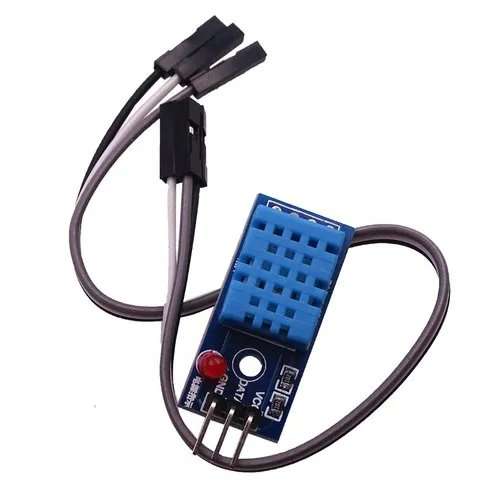
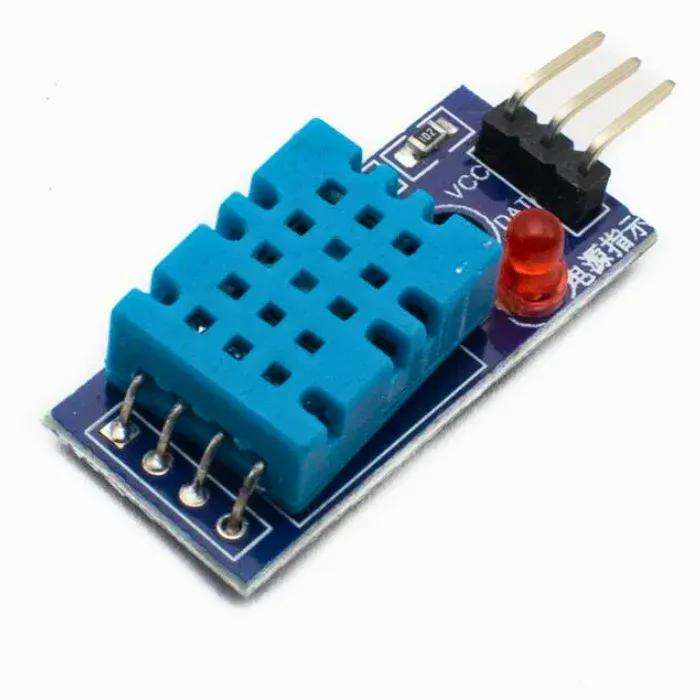
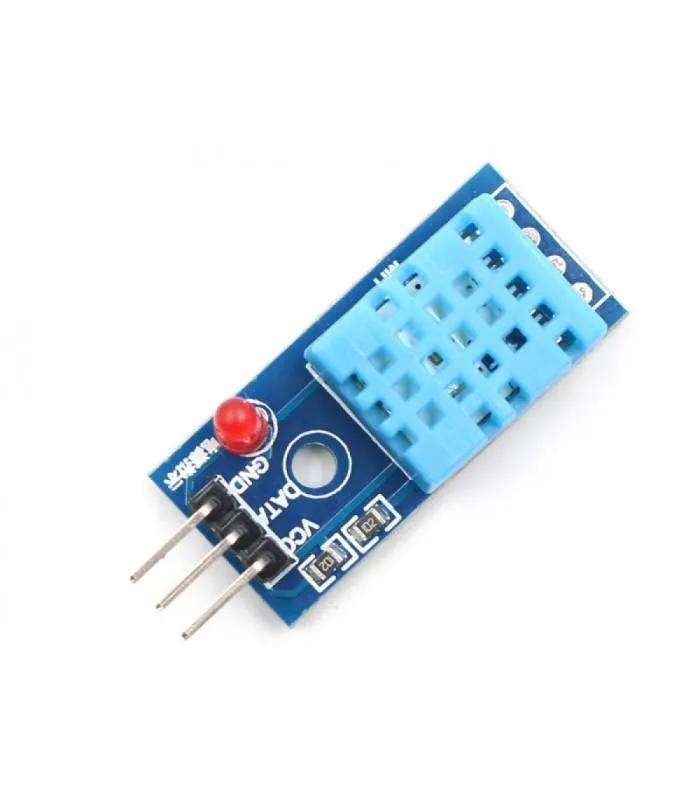


DHT11 Digital Relative Humidity and Temperature Sensor Module
DHT11 temperature and humidity sensor module is a reliable digital sensor designed to measure ambient temperature and relative humidity. It provides calibrated output with easy integration for Arduino, IoT, and automation projects, making it ideal for environmental monitoring and smart systems.
- Estimated Delivery : Up to 4 business days
DHT11 Digital Relative Humidity and Temperature Sensor Module
The DHT11 Digital Relative Humidity and Temperature Sensor Module is a compact digital sensing solution designed to measure ambient temperature and relative humidity with calibrated output. Because it combines a resistive humidity sensing element with an integrated NTC thermistor, it provides stable and accurate environmental readings. Moreover, the factory calibration ensures consistent performance without complex adjustments. As a result, it is commonly used in Arduino, IoT, and automation systems for reliable climate monitoring.
The DHT11 digital relative humidity and temperature sensor module is widely preferred due to its ease of use and dependable performance. It delivers real-time environmental data that can be used in smart systems, making it ideal for both beginners and professionals working on electronics and embedded systems.
Whether you are building a weather station, a smart home system, or an industrial monitoring solution, this sensor provides the foundational data you need. Its ability to measure both temperature and humidity in a single compact package eliminates the need for multiple sensors, saving both space and cost in your projects.
DHT11 Digital Relative Humidity and Temperature Sensor for Environmental Monitoring
Firstly, this module continuously detects surrounding humidity levels and temperature variations. In addition, the onboard processing chip converts analog signals into a clean digital output. Therefore, microcontroller integration becomes straightforward and efficient. Furthermore, its low power consumption makes it suitable for portable and battery-operated devices. Consequently, it performs reliably in long-term monitoring projects.
Because the dht11 digital relative humidity and temperature sensor module provides calibrated output, users do not need complex adjustments or external components. This makes it highly suitable for quick prototyping and real-world deployment.
The sensing capabilities of this module cover a wide range of environmental conditions. For humidity, it can measure from 20% to 90% relative humidity with reasonable accuracy. For temperature, it covers a range from 0°C to 50°C, which covers most indoor and general-purpose environmental monitoring needs. This range makes it perfect for home automation, greenhouse monitoring, and educational projects where extreme conditions are not typically encountered.
The response time of the DHT11 is fast enough for real-time monitoring applications. When environmental conditions change, the sensor quickly updates its output, allowing your system to respond promptly to changes in temperature or humidity. This responsiveness is critical in applications like HVAC control, where timely adjustments can improve comfort and energy efficiency.
If you are working specifically on temperature-only applications, you may also consider the LM35 Temperature Sensor, which provides precise analog temperature output.
- Digital calibrated signal output
- Low power consumption
- Stable long-term accuracy
- Integrated resistive humidity sensing element
- Built-in NTC temperature measurement
- 20% to 90% RH humidity measurement range
- 0°C to 50°C temperature measurement range
Easy Wiring and Microcontroller Compatibility
Additionally, the module features a single-wire digital data interface, which simplifies wiring connections. Because of this design, beginners can easily connect it to Arduino, ESP8266, ESP32, and similar development boards. At the same time, the fixed mounting hole allows secure installation inside project enclosures. Therefore, it is practical for both prototype development and finished IoT systems.
The dht11 digital relative humidity and temperature sensor module supports a wide range of microcontrollers, making it highly versatile for different applications. Its compact size and simple pin configuration allow quick installation in embedded systems.
Wiring the DHT11 is straightforward and requires only three connections: power (VCC), ground (GND), and data (DOUT). Unlike analog sensors that require analog-to-digital conversion, the DHT11 handles all signal processing internally and outputs a clean digital signal. This eliminates the need for additional components like voltage dividers or op-amps, simplifying your circuit design and reducing potential points of failure.
For beginners, this simplicity is invaluable. You can have the sensor connected to your Arduino or ESP32 board within minutes and start reading environmental data immediately. For professionals, this means faster prototyping and less time spent debugging hardware issues.
The single-wire protocol used by the DHT11 is well-documented and supported by numerous libraries available for most microcontroller platforms. Whether you are using the Arduino IDE, MicroPython, or PlatformIO, you will find ready-to-use code examples that get your sensor up and running quickly. This extensive community support is one of the key reasons why the DHT11 remains popular among makers and professionals alike.
Applications of DHT11 Digital Relative Humidity and Temperature Sensor Module
For example, this module is widely used in weather monitoring stations and smart home automation systems. Likewise, it supports greenhouse climate tracking and industrial environment control. In addition, students and hobbyists frequently integrate it into educational electronics projects. Overall, it offers an affordable and dependable solution for measuring indoor environmental conditions.
The dht11 digital relative humidity and temperature sensor module is also used in IoT-based data logging systems where continuous monitoring of environmental parameters is required. Its reliability and low cost make it a popular choice for large-scale deployment in automation systems.
Let us explore some specific applications in more detail:
Weather Monitoring Systems: The DHT11 is a core component in many DIY weather stations. By measuring both temperature and humidity, it provides essential data for understanding local weather patterns. When combined with other sensors like barometric pressure and rainfall sensors, you can build a comprehensive home weather station that rivals commercial products.
Smart Home Automation: In smart home systems, the DHT11 can trigger actions based on environmental conditions. For example, you can program your system to turn on a dehumidifier when humidity exceeds a certain threshold, or activate a fan when the temperature rises above comfortable levels. These automations improve comfort and can even help protect sensitive equipment or materials from environmental damage.
Greenhouse Climate Control: For gardeners and agricultural professionals, maintaining proper temperature and humidity is crucial for plant health. The DHT11 can be integrated into greenhouse control systems to monitor conditions continuously. When readings fall outside optimal ranges, the system can automatically activate ventilation, heating, or misting systems to maintain ideal growing conditions.
IoT Data Logging Systems: The DHT11 is ideal for IoT applications where environmental data needs to be recorded over time. Using an ESP8266 or ESP32, you can send temperature and humidity readings to cloud platforms like ThingSpeak, Blynk, or AWS IoT Core. This allows you to monitor conditions remotely, generate graphs, and receive alerts when readings exceed set thresholds.
Educational Arduino Projects: The DHT11 is one of the most common sensors used in educational settings. Its simple interface and clear output make it perfect for teaching students about sensors, microcontrollers, and data acquisition. Projects range from basic temperature displays to complex data logging systems that teach valuable programming and electronics skills.
Server Room and Equipment Monitoring: Temperature and humidity monitoring is critical in server rooms and equipment enclosures. Excessive heat or moisture can damage sensitive electronics. The DHT11 can be used to monitor these environments and trigger cooling systems or send alerts before conditions reach dangerous levels.
For distance measurement and obstacle detection projects, you can pair it with the Ultrasonic Sensor HC-SR04 to build a more complete environmental monitoring setup.
You may also explore our Sensors Collection for more environmental and IoT monitoring modules.
- Weather Monitoring Systems
- Home Automation Projects
- Greenhouse Climate Control
- IoT Data Logging Systems
- Educational Arduino Projects
- Server Room Environmental Monitoring
- HVAC Control Systems
- Museum and Archive Climate Control
- Animal Enclosure Monitoring
Technical Specifications and Performance
Understanding the technical specifications of the dht11 digital relative humidity and temperature sensor module helps you determine if it is right for your application. Here are the key specifications:
Humidity Measurement: The DHT11 measures relative humidity from 20% to 90% with an accuracy of ±5%. While this accuracy is sufficient for most hobbyist and general-purpose applications, professionals requiring higher precision may want to consider the DHT22 or other higher-end sensors.
Temperature Measurement: The temperature measurement range is 0°C to 50°C with an accuracy of ±2°C. Again, this is adequate for indoor environmental monitoring and general-purpose use. The sensor’s response time for temperature changes is approximately 6 to 10 seconds.
Sampling Rate: The DHT11 has a maximum sampling rate of 1 Hz, meaning it can provide one reading per second. This is sufficient for most environmental monitoring applications where rapid changes are not expected. For applications requiring faster sampling, other sensors may be more appropriate.
Power Requirements: The sensor operates on 3.3V to 5V DC, making it compatible with both 3.3V logic boards like the ESP32 and 5V boards like the Arduino Uno. Maximum current consumption during measurement is approximately 2.5mA, dropping to near zero when idle.
These specifications make the DHT11 an excellent choice for battery-powered applications where low power consumption is critical. With proper power management, a single battery can power the sensor for extended periods.
Advantages of DHT11 Digital Relative Humidity and Temperature Sensor Module
The dht11 digital relative humidity and temperature sensor module offers several advantages including ease of use, low cost, and stable performance. It is designed to provide consistent readings without requiring complex calibration.
Its energy-efficient design makes it suitable for battery-powered devices, while its compact form factor allows easy integration into small projects. These features make it one of the most widely used environmental sensors in the electronics industry.
Cost-Effective Solution: One of the primary advantages of the DHT11 is its affordability. For the price of a single premium sensor, you can purchase multiple DHT11 modules, making it ideal for projects that require multiple sensing points or for educational settings where many students need their own sensors.
Plug-and-Play Operation: Thanks to the factory calibration, the DHT11 works right out of the box. There is no need to perform offset adjustments or gain calibrations. Simply connect power, ground, and data, and start reading values. This plug-and-play nature significantly reduces development time and eliminates a common source of frustration for beginners.
Robust Library Support: The DHT11 is supported by numerous libraries across all major microcontroller platforms. For Arduino, the DHT sensor library by Adafruit provides a simple, consistent interface for reading both temperature and humidity. Similar libraries exist for ESP-IDF, MicroPython, CircuitPython, and Raspberry Pi.
Proven Reliability: The DHT11 has been on the market for many years and has been used in countless projects worldwide. Its reliability and predictable behavior are well-documented, making it a safe choice for both prototyping and production applications.
Package Includes
- 1 × DHT11 Digital Relative Humidity and Temperature Sensor Module
Getting Started with DHT11 Programming
To help you get started with your dht11 digital relative humidity and temperature sensor module, here is a simple example using Arduino:
First, install the DHT sensor library through the Arduino Library Manager. Then, connect the sensor’s VCC to 5V, GND to GND, and DOUT to digital pin 2 on your Arduino board.
A basic code example would initialize the sensor, read temperature and humidity values, and output them to the serial monitor. The library handles all the timing and protocol requirements, making it easy to focus on your application logic.
For ESP8266 and ESP32 users, the same libraries work with minor pin configuration changes. The ESP series boards can also add WiFi connectivity, allowing you to create IoT applications that send sensor data to the cloud for remote monitoring and analysis.
Troubleshooting Common DHT11 Issues
Even with its ease of use, you may encounter some common issues when working with the dht11 digital relative humidity and temperature sensor module. Here are solutions to frequent problems:
No Data or Invalid Readings: This is often caused by incorrect wiring or missing pull-up resistors. Ensure your connections are secure and that you have connected the data pin correctly. Some modules include an onboard pull-up resistor, but others require an external 10k ohm resistor between VCC and DOUT.
Intermittent Readings: The DHT11 requires specific timing for communication. If your code includes delays or other time-sensitive operations, it may interfere with sensor communication. Ensure that you are using non-blocking code or that you are not calling the sensor reading function too frequently.
Inaccurate Readings: If your readings seem off, consider the sensor’s placement. Proximity to heat sources, direct sunlight, or air currents can affect readings. Also, the sensor may need time to stabilize after power-up before providing accurate readings.
For programming guidance and technical references, you can visit the Arduino Official Documentation. Additionally, reviewing official microcontroller documentation can further simplify implementation.
Conclusion
The DHT11 Digital Relative Humidity and Temperature Sensor Module is an excellent choice for anyone needing reliable environmental monitoring. Its combination of low cost, ease of use, and dependable performance makes it ideal for a wide range of applications from educational projects to professional IoT systems. Whether you are a beginner taking your first steps into electronics or an experienced developer building complex automation systems, the DHT11 provides the temperature and humidity data you need in a simple, well-supported package.
Order your DHT11 module today from Mall of Aviation and start building your next environmental monitoring project.
1 review for DHT11 Digital Relative Humidity and Temperature Sensor Module
5.00 out of 5 stars
Add a review
You may also like…
Related products
-
-
-
-
Speed Sensor
₹3,000
MANTU –
Simple and Reliable Sensor for Basic Temperature & Humidity Projects
The DHT11 Digital Relative Humidity and Temperature Sensor Module is a great choice for anyone starting with environmental sensing projects. Its biggest advantage is simplicity—just three connections and you can quickly get temperature and humidity readings on Arduino or ESP boards. The built-in calibration and digital output make it very beginner-friendly, with no need for complex setup.
In terms of performance, it delivers stable and consistent readings for indoor use. The accuracy is decent for general applications like home automation, weather stations, or educational projects. However, it’s not meant for high-precision requirements or extreme conditions, as the range and accuracy are somewhat limited compared to higher-end sensors.
The low power consumption and compact design make it suitable for long-term and battery-powered projects. Also, strong community support and readily available libraries make coding and integration very easy.
Overall, the DHT11 is a cost-effective and dependable sensor for basic monitoring tasks. If you need a simple, plug-and-play solution for temperature and humidity tracking, it does the job well.