
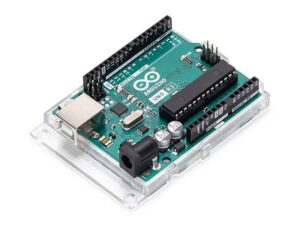
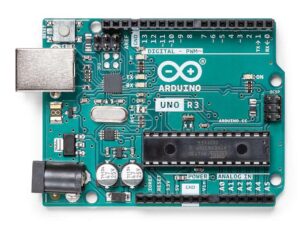
Arduino Uno R3
₹461Popular Arduino development board.
Microcontrollers at Mall of Aviation include development boards for drone projects, robotics, automation, IoT, and embedded electronics. Explore boards such as Arduino, ESP32, and Raspberry Pi for prototyping, sensor integration, wireless communication, and custom electronic projects. Whether you are a student, hobbyist, developer, or drone builder, these boards provide a practical starting point for creating and testing your own systems.
Showing all 3 results
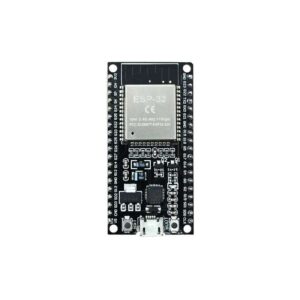
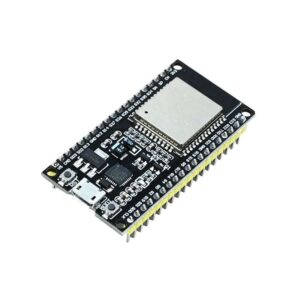
WiFi & Bluetooth development board.
Microcontrollers and development boards provide the control and computing capabilities needed for many electronics projects. They allow developers to connect sensors, communicate with other devices, process inputs, and control connected hardware. At Mall of Aviation, the Microcontrollers category brings together development boards suitable for drone projects, robotics, automation, IoT, education, and embedded electronics.
Our collection includes popular development platforms such as Arduino Uno R3, ESP32 development boards, and Raspberry Pi. Each platform offers different capabilities, making it important to choose a board according to the processing, connectivity, programming, and hardware requirements of your project.
The Arduino Uno R3 is a popular development board for learning electronics, prototyping, and building interactive projects. It can be used to read sensors, control electronic components, and experiment with basic automation and robotics applications.
For students and beginners, Arduino provides a practical way to understand programming and how software interacts with physical hardware. It can also be useful when developing custom prototypes for robotics, automation, and drone-related projects.
ESP32 development boards combine microcontroller capabilities with built-in wireless connectivity, making them useful for projects that require communication between devices. They can be used for IoT applications, sensors, automation, robotics, and custom electronics.
Depending on the project, an ESP32 can communicate with sensors and other devices over wireless connections while processing data locally. This makes it a flexible option for developers experimenting with connected electronics and smart systems.
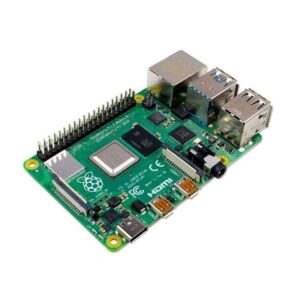
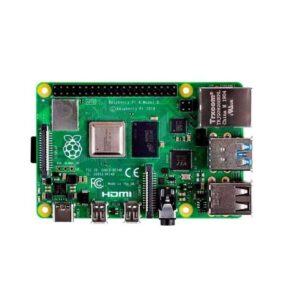
The Raspberry Pi is a compact single-board computer that can be used for more advanced computing and development tasks. Unlike a traditional microcontroller, it can run a full operating system and support applications that require greater processing capabilities.
Raspberry Pi boards can be used in robotics, computer vision, automation, networking, data processing, and experimental UAV projects where a small computer is required.
Development boards can be useful during drone and UAV prototyping when you need to test sensors, communication systems, automation ideas, or custom electronics. They can be used alongside other drone components depending on the requirements of the project.
For example, a development board may be used to collect sensor information, control a custom electronic function, communicate with another device, or test an experimental system before integrating it into a larger UAV project.
It is important to understand that development boards such as Arduino, ESP32, and Raspberry Pi are not automatically flight controllers. A flight controller is a specialized system designed specifically for managing the stabilization and control of a drone. Whether a development board can be used for a particular UAV function depends on the hardware, software, sensors, and project design.
The right board depends on what you want to build. Before choosing a microcontroller or development board, consider factors such as processing capability, memory, number of input/output pins, wireless connectivity, supported communication interfaces, operating voltage, programming environment, and compatibility with other components.
For simple electronics and learning projects, an Arduino board may be a convenient starting point. For projects requiring wireless connectivity, an ESP32 can be a useful option. When a project requires an operating system, additional computing power, or more advanced software, a Raspberry Pi may be more suitable.
These boards can be used for a wide range of projects, including:
Development boards make it easier to test an idea before building a complete electronic system. Instead of designing every circuit from scratch, developers can connect sensors and other components to an existing board and begin programming and testing their concept.
This makes development boards particularly useful for students, engineers, hobbyists, and drone builders working on experimental projects. They provide a practical way to test hardware and software together and identify problems during the early stages of development.
A microcontroller is a programmable electronic device designed to receive inputs, process information, and control connected hardware. Microcontrollers are commonly used in embedded systems, robotics, automation, sensors, and electronic devices.
A development board is a ready-to-use circuit board built around a microcontroller, processor, or other electronic device. It usually provides convenient connections for programming, power, sensors, and other components, making prototyping easier.
Arduino refers to a family of development boards and the associated software ecosystem. For example, the Arduino Uno R3 is a development board built around a microcontroller and is widely used for electronics, programming, education, and prototyping.
ESP32 development boards are commonly used for embedded and IoT projects that require processing and wireless communication. They can connect to sensors and other devices and are suitable for many automation, robotics, and connected-electronics applications.
Raspberry Pi is generally a single-board computer rather than a traditional microcontroller. It can run an operating system and is suitable for applications requiring more computing resources, such as robotics, computer vision, networking, and data processing.
Yes. Arduino and ESP32 boards can be used for certain custom drone and UAV experiments, sensor projects, automation functions, and prototypes. Their suitability depends on the specific hardware and software requirements of the project.
The best board depends on the project. Arduino boards are often a straightforward starting point for learning basic electronics and programming, while ESP32 is useful when wireless connectivity is required. Raspberry Pi is better suited to projects that need an operating system and greater computing capability.
Check the board's processor or microcontroller, memory, input/output pins, operating voltage, communication interfaces, wireless features, programming support, and compatibility with the components you plan to use.
Explore the Microcontrollers category at Mall of Aviation to find development boards for drone experiments, robotics, IoT, automation, embedded electronics, education, and custom hardware projects.
Don't have an account yet? Sign up
No items in your cart. Go on, fill it up with something you love!
Start Shopping Now