


Infrared Obstacle Avoidance Sensor Module IR Detection for Arduino and DIY Projects
- Estimated Delivery : Up to 4 business days
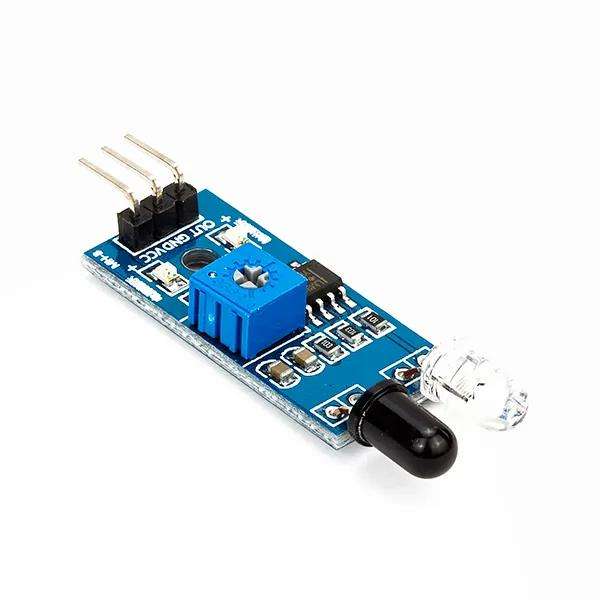
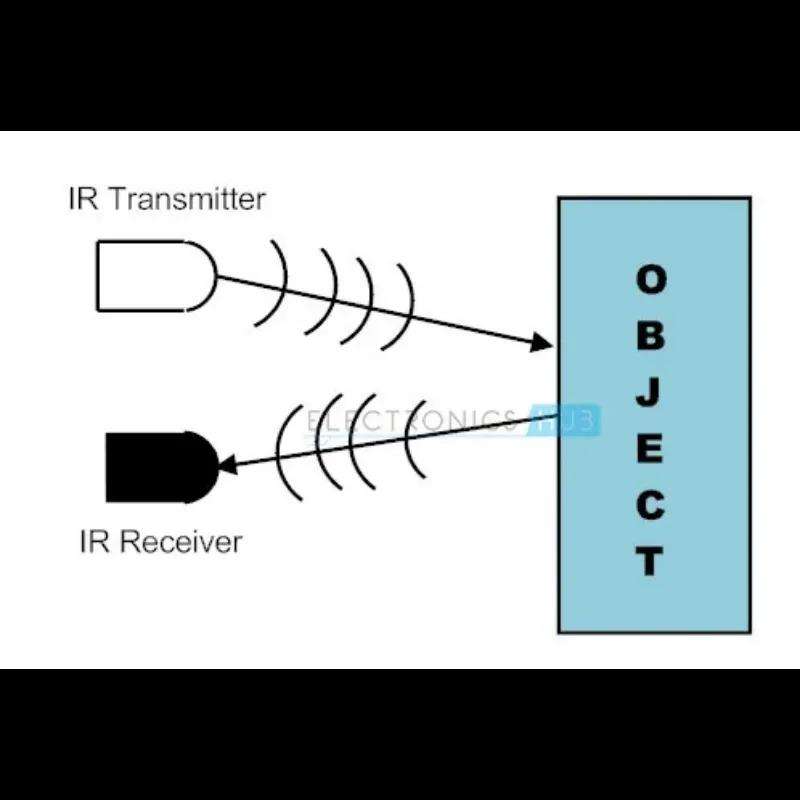
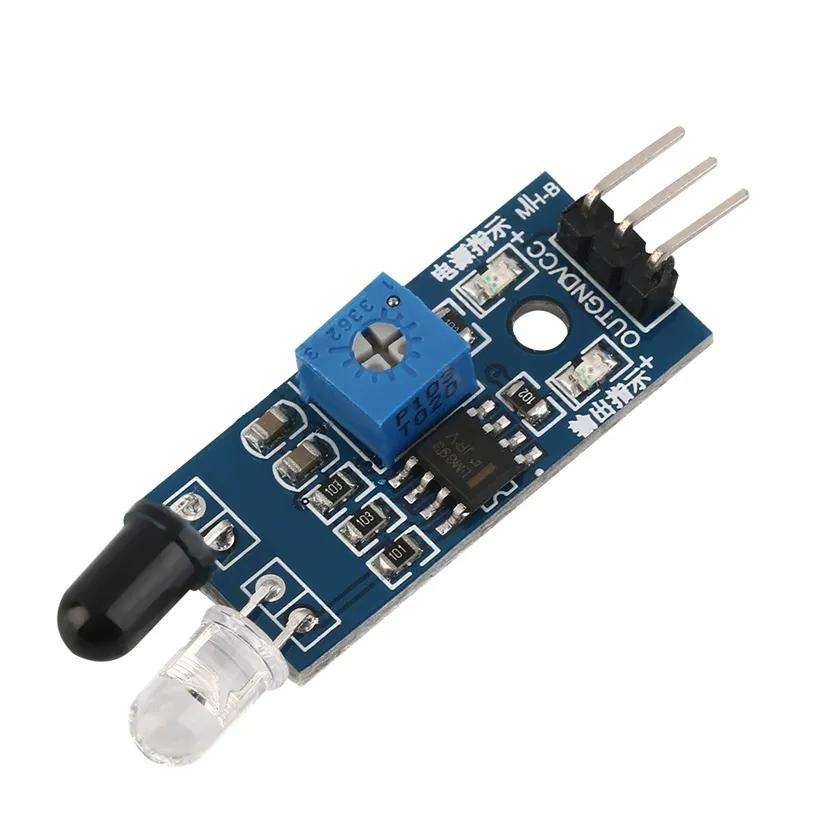
Infrared Obstacle Avoidance IR Sensor Module (Active Low) has a pair of infrared transmitting and receiving tubes. When the transmitted light waves are reflected back, the reflected IR waves will be received by the receiver tube. The onboard comparator circuitry does the processing and the green indicator LED comes to life. To know sensor working.
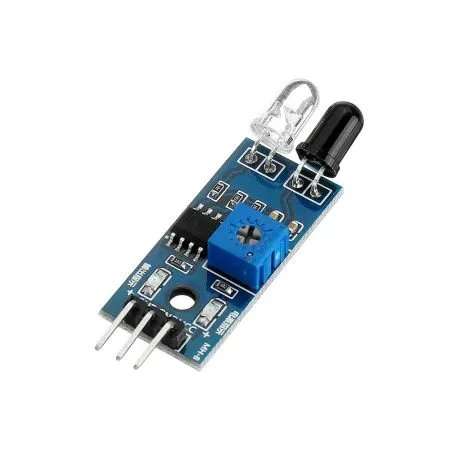
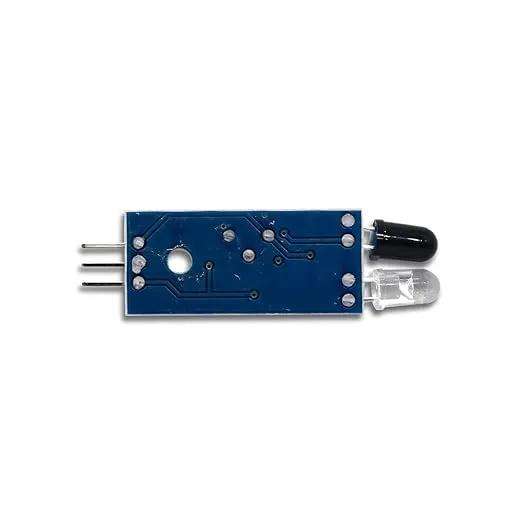
The module features a 3 wire interface with Vcc, GND, and an OUTPUT pin on its tail. It works fine with 3.3 to 5V levels. Upon hindrance/reflectance, the output pin gives out a digital signal (a low-level signal).
Circuit Diagram of IR Sensor With Arduino
Features:
Easy to assemble and use
Onboard detection indication
The effective distance range of 2cm to 80cm
A preset knob to fine-tune the distance range
If there is an obstacle, the indicator lights on the circuit board.
Package Includes :
1 X Infrared Obstacle Avoidance Sensor Module IR Detection for Arduino and DIY Projects
1 review for Infrared Obstacle Avoidance Sensor Module IR Detection for Arduino and DIY Projects
5.00 out of 5 stars
Add a review
Related products
-
-
Speed Sensor
₹3,000 -
-
RAGINI –
Reliable and Beginner-Friendly IR Obstacle Sensor for Arduino Projects
The Infrared Obstacle Avoidance Sensor Module is a simple yet effective component for Arduino and DIY electronics projects. It’s very easy to set up thanks to the basic 3-wire interface (Vcc, GND, and Output), making it a great choice for beginners as well as experienced hobbyists.
The sensor performs well within its stated range, detecting obstacles between 2cm and 80cm depending on surface and lighting conditions. The adjustable potentiometer is a useful addition, allowing you to fine-tune the detection distance as per your project needs. The onboard LED indicator also helps quickly verify whether the sensor is detecting an object, which is especially helpful during testing.
In real-world use, it works reliably for line-following robots, obstacle-avoiding bots, and simple automation tasks. However, performance can slightly vary under strong sunlight or with very dark/absorbent surfaces, which is common for IR-based sensors.
Overall, it’s a cost-effective and practical sensor module that delivers good performance for most basic robotics and automation applications.