How to Launch and Land an FPV Wing
Quick Summary: This fpv wing launch and landing guide covers everything you need to know as a beginner. Mastering fpv wing launch and landing guide techniques will help you fly confidently without crashes. This fpv wing launch and landing guide explains safe launch techniques, landing strategies, and expert tips for every pilot.
FPV Wing Launch and Landing Guide: A Beginner’s Complete Tutorial (2026)
Flying an FPV wing is an exciting experience, especially for pilots learning how to build an FPV drone, but for beginners, the most challenging part isn’t flying — it’s mastering the takeoff and touchdown. This fpv wing launch and landing guide is designed to help new pilots overcome these hurdles. Many new pilots crash not because of poor flying skills, but due to incorrect takeoff or landing techniques. That is why this fpv wing launch and landing guide focuses on simple, repeatable methods that work every time.
In this detailed fpv wing launch and landing guide from Mall of Aviation, you will learn simple, proven methods to safely launch and land your FPV wing — even if you are a complete beginner. Whether you are flying a small wing or a large long-range platform, this fpv wing launch and landing guide provides the foundational knowledge you need for success.
In This FPV Wing Launch and Landing Guide
Different Launch Methods for FPV Wings – FPV Wing Launch and Landing Guide
There is no single perfect way to launch an FPV wing. Different pilots use different techniques depending on wing size, weight, motor power, and weather conditions. This fpv wing launch and landing guide explains the most common methods so you can choose what works best for you. The method explained in this fpv wing launch and landing guide is simple, beginner-friendly, and works for most FPV wings — even without advanced flight controllers or stabilization systems.
Key factors that influence your launch technique include:
- Wing size and weight
- Motor power (thrust-to-weight ratio)
- Weather conditions and wind speed
- Personal comfort and experience level
Important: Crashing is part of learning. Always start with a durable foam wing to minimize damage as you follow this fpv wing launch and landing guide.
Pre-Flight Preparation Before Launch – FPV Wing Launch and Landing Guide
Before diving into launch techniques, this fpv wing launch and landing guide emphasizes proper preparation. Taking a few minutes to prepare can save you from costly crashes.
1. Choose the Right Location for Your FPV Wing
- Fly in a wide open area away from obstacles
- Avoid trees, buildings, and power lines
- Prefer grass fields for softer landings
- Fly in low wind conditions when learning
2. Perform Safety Checks Before Launch
- Battery fully charged and securely mounted
- Control surfaces moving in the correct direction
- FPV video signal working properly
- Camera lens clean and clear
- Propeller properly attached and undamaged
Pro Tip from This FPV Wing Launch and Landing Guide: Keep your FPV goggles on your forehead during launch — switch to FPV only after stable flight is achieved.
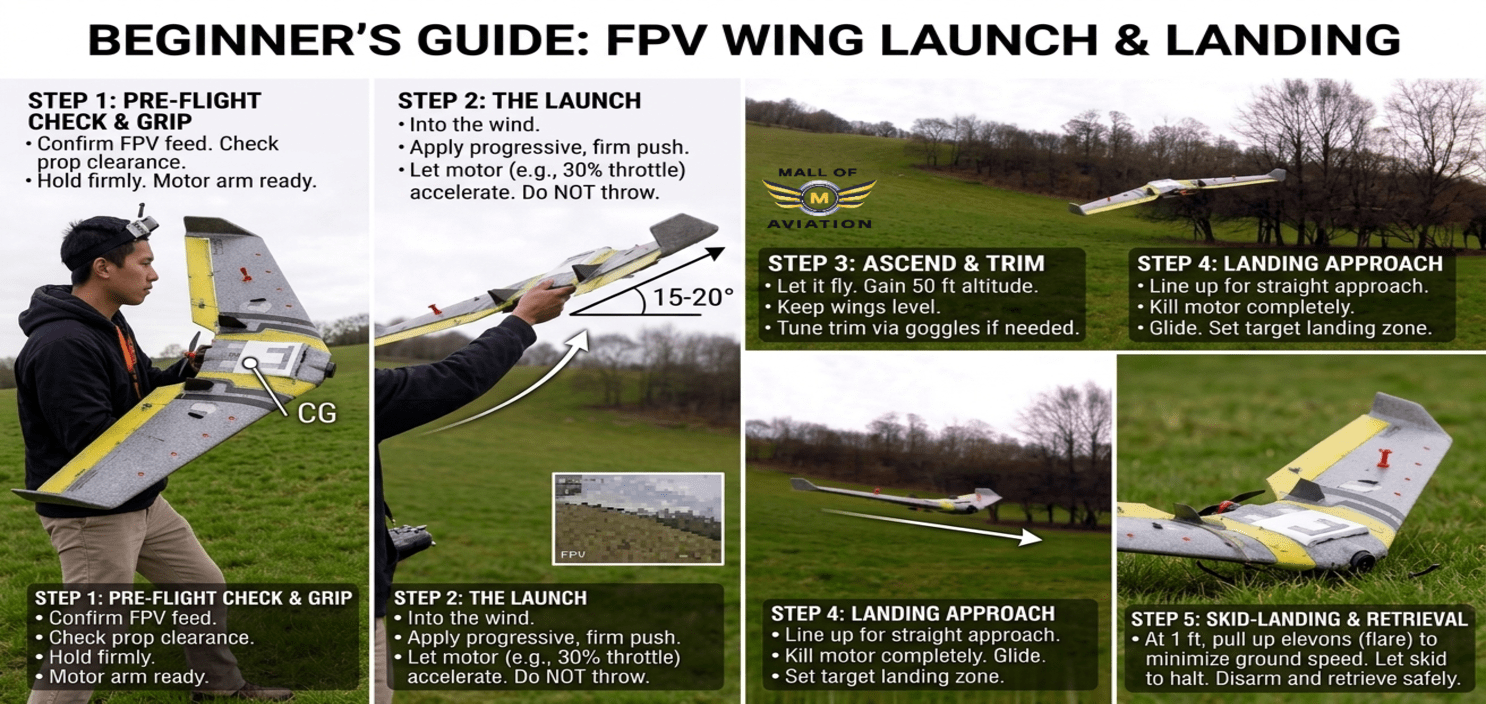
Step-by-Step FPV Wing Launch Guide – FPV Wing Launch and Landing Guide
This section of our fpv wing launch and landing guide walks you through the actual launch sequence. Follow these steps carefully for consistent results.
Step 1: Check Wind Direction Before Launch
Throw grass or dust in the air to determine wind direction. Always launch into the wind for better lift and stability. This fpv wing launch and landing guide cannot stress this enough — launching downwind is a common beginner mistake.
Step 2: Grip the Wing Properly
Hold the wing from the leading edge near the center using your left hand (recommended). Keep a firm but relaxed grip. A proper grip is essential for a clean release.
Step 3: Set Throttle Before Launch
Increase throttle to a level where you feel the wing pulling forward. This fpv wing launch and landing guide recommends starting between 50% to 90% throttle. Avoid full throttle if you are a beginner.
Step 4: The Toss – Most Critical Step in This FPV Wing Launch and Landing Guide
Key Technique from This FPV Wing Launch and Landing Guide: Smooth, straight, and slightly upward throw at approximately a 30-degree angle.
- Swing your arm forward naturally without jerking
- Release cleanly — do not twist your wrist
- Keep the wing level throughout the throw
Once released, immediately use your FPV radio controller to stabilize the wing. Your right hand should already be on the controls.
Step 5: Switch to FPV Mode After Stable Flight
After the wing is flying straight and stable, gently adjust roll and pitch using proper FPV rates and expo settings to maintain level flight. Then pull your goggles down and continue flying in FPV mode. This fpv wing launch and landing guide recommends waiting at least 5-10 seconds after launch before putting on goggles.
Why This Launch Method Works – FPV Wing Launch and Landing Guide
Image Alt: FPV wing launch and landing guide diagram showing proper launch technique with hand positioning and throw angle
This launch method, as detailed in our fpv wing launch and landing guide, allows you to maintain control immediately after release. The benefits include:
- Right hand stays on control stick for instant corrections
- Faster reaction during unstable launches
- Better control during maiden flights
- Reduced risk of nose-first crashes
Benefit of Following This FPV Wing Launch and Landing Guide: You can recover from bad throws instantly — dramatically reducing crash chances.
Left Hand vs Right Hand Launch Technique – FPV Wing Launch and Landing Guide
Most pilots use Mode 2 radios, where pitch and roll are controlled by the right hand. This fpv wing launch and landing guide recommends left-hand launching for optimal control.
- Left-hand launch: Best for control (recommended by this fpv wing launch and landing guide)
- Right-hand launch: More natural but less control initially
Even if it feels awkward at first, practicing left-hand launch gives you better flight stability and faster crash recovery. This fpv wing launch and landing guide encourages you to practice this technique on the ground before your first flight.
How to Land an FPV Wing Safely – FPV Wing Launch and Landing Guide
Landing is just as important as launching. This fpv wing launch and landing guide covers both halves of the flight. Follow these steps for smooth landings every time.
1. Approach for Landing
- Fly into the wind for better control
- Reduce throttle gradually as you descend
- Descend slowly toward your chosen landing area
- Keep the wings level using small roll inputs
2. Final Glide – Critical Phase of This FPV Wing Launch and Landing Guide
- Cut throttle when near the ground (5-10 feet altitude)
- Gently pull elevator (pitch up) to flare
- Keep wings level using roll input
- The wing should stall gently onto the ground
3. Touchdown
Tip from This FPV Wing Launch and Landing Guide: Smooth landing = low throttle + gentle pitch up just before touchdown.
Avoid sudden throttle increase during landing — it may cause the wing to climb and miss the landing spot. Practice landings repeatedly until they become natural.
Beginner Tips for Better FPV Wing Flying – FPV Wing Launch and Landing Guide
To wrap up this fpv wing launch and landing guide, here are essential tips for beginner pilots:
- Practice launches without FPV goggles first
- Always launch into the wind — this fpv wing launch and landing guide emphasizes this
- Use durable foam wings that can survive crashes
- Keep throttle consistent during launch phase
- Stay calm during launch — nerves cause mistakes
- Do not rush the transition to FPV mode
- Practice landing repeatedly until it becomes automatic
- Use a flight simulator to practice launches before going to the field
Recommended External Resources:
For more information on FPV wing flying techniques, visit the FPV Know It All and the RotorBuilds FPV Community for build logs and pilot discussions.
Start Your FPV Wing Journey Today
Now that you have completed this fpv wing launch and landing guide, explore high-quality FPV wings, electronics, and accessories at Mall of Aviation.
FAQs About FPV Wing Launch and Landing – FPV Wing Launch and Landing Guide
1. Is launching FPV wings difficult for beginners?
According to this fpv wing launch and landing guide, launching can feel tricky at first, but with practice and proper technique, it becomes easy. Most pilots master it within 5-10 launch attempts.
2. What is the best launch method recommended by this fpv wing launch and landing guide?
This fpv wing launch and landing guide recommends the left-hand toss with right-hand on the controls as the most effective method for beginners. It provides the best balance of control and stability.
3. Can beginners fly FPV wings successfully?
Yes, but start with durable foam models and practice launching techniques on the ground first. This fpv wing launch and landing guide is specifically designed for beginners to build confidence.
4. Why does my wing crash immediately after launch?
Common reasons include low launch speed, poor throw angle, incorrect throttle setting, or launching downwind. This fpv wing launch and landing guide recommends checking all four factors.
5. How do I land an FPV wing without damaging it?
Reduce throttle gradually, fly into the wind, flare gently before touchdown, and aim for grass or soft surfaces. This fpv wing launch and landing guide recommends practicing landings at higher altitude first.
Final Thoughts – FPV Wing Launch and Landing Guide
Launching and landing are the most important skills every FPV wing pilot must learn. This fpv wing launch and landing guide has provided you with all the foundational knowledge you need to get started safely.
At first, it may feel difficult — but with consistent practice, it becomes second nature. Focus on smooth launches, controlled landings, and staying calm during flight. Revisit this fpv wing launch and landing guide whenever you need a refresher.
With the right technique and patience from this fpv wing launch and landing guide, you will soon be flying confidently and enjoying the full FPV experience.
Mall of Aviation is here to support your FPV journey with expert guides like this fpv wing launch and landing guide and premium gear for every pilot.