What’s the Best Camera Angle for an FPV Drones
FPV Drone Guides & Tutorials
Quick Summary:
Finding the ideal camera angle for an fpv drones is a personal journey. There is no single setting that works for every pilot. The perfect camera angle for an fpv drones depends on your skill level, flying style, and speed requirements. Beginners should start with a low angle around 10 to 15 degrees, while experienced pilots often prefer higher angles between 25 and 35 degrees for aggressive freestyle and racing. This guide from Mall of Aviation will help you find your perfect camera angle for an fpv drones.
What Is the Best Camera Angle for an FPV Drone? Complete 2026 Guide
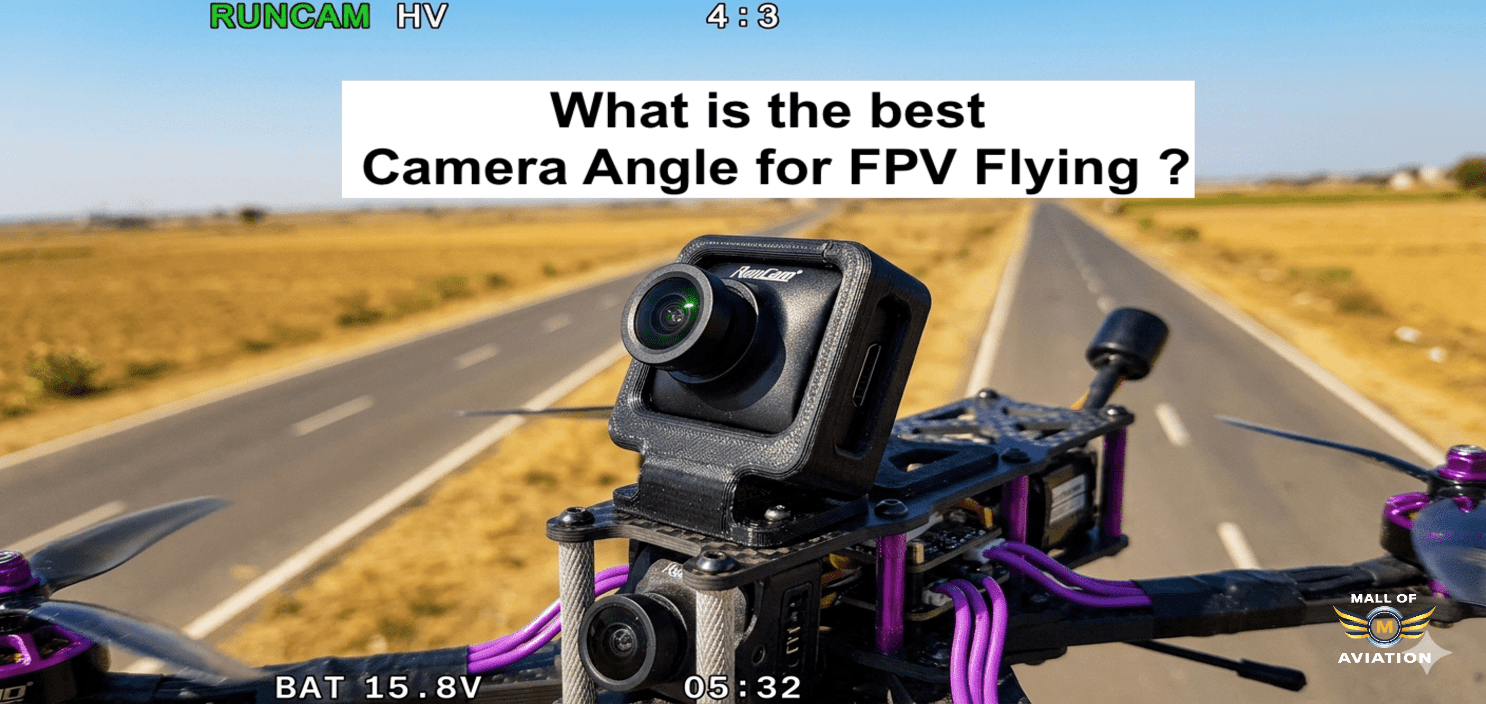
One of the most common questions every FPV pilot asks is: what is the best camera angle for an FPV drones?
The truth is, there is no single perfect answer. The ideal camera angle depends on your experience level, flying style, and the type of flying you want to do.
For beginners, a lower camera angle feels stable and easier to control. However, the same setting may feel slow and restrictive for experienced pilots.
On the other hand, a higher camera angle can feel fast and smooth for freestyle or racing, but it may be difficult for new pilots to handle.
In this complete guide from Mall of Aviation, you will learn how to choose the right camera angle for an FPV drones, how it affects flight performance, and how to adjust it for your flying style.
In This Guide
Why Choosing the Right Camera Angle for an FPV Drones Matters
Your chosen camera angle for an fpv drones is one of the most critical settings that directly impacts how your drone behaves in the air. It determines what you see through your goggles and influences how you control the drone. When you increase the camera angle for an fpv drones, you naturally tilt the drone forward more during forward flight, which increases speed but reduces visibility when hovering or flying slowly. Conversely, a lower camera angle for an fpv drones gives you better visibility at low speeds but makes high-speed flight feel less natural.
Here is how your camera angle for an fpv drones affects your flying experience:
- Higher camera angle: Creates faster forward flight, smoother throttle response at high speeds, but makes hovering and landing more challenging.
- Lower camera angle: Provides better visibility for slow flying, easier hovering, and more controlled landings, but limits top-end speed potential.
- Medium camera angle: Offers the best balance for most pilots, allowing both controlled low-speed maneuvers and confident high-speed passes.
Key Insight: Your camera angle for an fpv drones does not change the maximum speed your drone can achieve. Instead, it changes how comfortable and natural it feels to fly at different speeds. A higher angle makes high-speed flight feel more intuitive.
Best Camera Angle for an FPV Drones: Beginner Recommendations
If you are new to FPV flying, choosing the right FPV angle setup can make the difference between a frustrating experience and a smooth learning curve. The best camera angle for an fpv drones for beginners is between 10 and 15 degrees. Here is why this range works so well for new pilots:
- Better forward visibility: A lower camera angle for an fpv drones allows you to see more of the ground and obstacles in front of you, which is essential when learning basic maneuvers.
- Easier hovering and landing: With a low angle, the drone feels more stable and responsive to throttle inputs, making hovering and landing much easier.
- Slower, more controlled flight: A lower camera angle for an fpv drones naturally encourages slower, more deliberate flying, which reduces crashes and builds confidence.
- Forgiving control response: The drone feels less twitchy, allowing you to develop muscle memory without being overwhelmed by speed.
Beginner Tip: Start with a camera angle for an fpv drones of 10 to 15 degrees and resist the urge to increase it too quickly. Master the basics first. As you gain confidence, increase your angle gradually in 5-degree increments.
Many beginners make the mistake of copying professional pilots who use angles between 30 and 45 degrees. This is a recipe for frustration. High angles require precise throttle control and fast reflexes that only come with experience. Start low, build your skills, and let your camera angle for an fpv drones grow with you.
Optimal Camera Angle for an FPV Drones in Freestyle Flying
Freestyle flying is all about creativity, fluidity, and expressing yourself through tricks and maneuvers. The ideal camera angle for an fpv drones for freestyle typically falls between 20 and 35 degrees, with most experienced freestyle pilots settling in the 25 to 30 degree range. Here is why this camera angle for an fpv drones works so well for freestyle:
- Excellent balance: A 25 to 30 degree angle provides a perfect balance between speed and control, allowing you to perform aggressive tricks while maintaining precision.
- Smooth transitions: This range allows for seamless transitions between slow, floaty tricks and fast, aggressive moves.
- Good visibility: You can still see the ground and obstacles when slowing down, which is essential for low-altitude tricks like matty flips and power loops.
- Natural feel: Most pilots find that this camera angle for an fpv drones feels the most natural for freestyle flow.
However, it is important to note that freestyle is highly personal. Some pilots prefer a slightly lower angle around 20 degrees for more technical, slow-motion tricks. Others who fly fast, aggressive freestyle may push their angle closer to 35 degrees. The key is to experiment and find what feels right for your style.
Freestyle Sweet Spot: The 25 to 30 degree camera angle for an fpv drones is the most common choice among freestyle pilots. It offers the versatility to handle both technical tricks and high-speed passes without compromise.
High Performance Camera Angle for an FPV Drones in Racing
Racing is a different beast entirely. When you are pushing for lap times, the camera angle for an fpv drones needs to be significantly higher to maintain forward visibility at high speeds. Racing pilots typically use angles between 35 and 50 degrees. Here is why such a high camera angle for an fpv drones is essential for racing:
- Forward visibility at speed: When you are flying at 80 to 100 mph, a low angle would point your view toward the sky. A high angle keeps the horizon and gates in view.
- Aggressive cornering: High angles allow you to lean into turns more aggressively without losing visual reference.
- Reduced drag: A higher angle naturally tilts the drone forward, reducing aerodynamic drag and improving straight-line speed.
- Consistent throttle feel: At high speeds, a high camera angle for an fpv drones makes throttle control feel smoother and more predictable.
If you are new to racing, do not jump straight to 50 degrees. Start around 30 to 35 degrees and gradually increase your camera angle for an fpv drones as you become more comfortable with high-speed flight. Racing requires not just a high angle but also the reflexes and muscle memory to handle it.
Choosing the Right Camera Angle for an FPV Drones for Cinematic Flying
Cinematic FPV is about capturing smooth, beautiful footage that tells a story. The camera angle for an fpv drones for cinematic flying depends heavily on the type of shots you are trying to capture:
- Slow, smooth cinematic shots: A lower angle between 10 and 20 degrees works best. This allows you to fly slowly and maintain a balanced composition without rushing.
- Fast, dynamic cinematic shots: If you are chasing cars, bikes, or capturing fast-moving subjects, a higher angle between 20 and 30 degrees is more appropriate.
- Match your action camera: If you are flying with a GoPro or DJI O4 Pro for cinematic footage, it is crucial to match the camera angle for an fpv drones with your action camera. Mismatched angles will result in footage that looks tilted or off-balance.
Cinematic Pro Tip: For the most professional results, match your FPV camera angle for an fpv drones with your action camera tilt. If your GoPro is at 20 degrees, set your FPV angle to 20 degrees as well.
How Your Camera Angle for an FPV Drones Affects Flight Dynamics
Understanding the physics behind your camera angle for an fpv drones will help you make better decisions as you progress. Here is what happens when you change your angle:
Low Camera Angle for an FPV Drones (10 to 20 Degrees)
- The drone remains relatively level during forward flight.
- More thrust is directed vertically, making throttle feel sensitive and responsive.
- Hovering and low-speed control feel natural and intuitive.
- Forward speed feels limited because you have to pitch forward manually to gain speed.
Medium Camera Angle for an FPV Drones (20 to 35 Degrees)
- The drone naturally tilts forward during forward flight.
- Throttle response feels smoother and less twitchy.
- Good balance between low-speed control and high-speed confidence.
- Ideal for freestyle and all-around flying.
High Camera Angle for an FPV Drones (35 to 50 Degrees)
- The drone is significantly tilted forward during forward flight.
- Most thrust is directed forward, creating a sensation of speed and smoothness at high throttle.
- Hovering and low-speed flight require conscious effort to keep the drone level.
- Landing becomes more challenging because you cannot see directly below the drone.
How to Adjust Your Camera Angle for an FPV Drones
Adjusting your camera angle for an fpv drones is simple, but doing it correctly is important for consistent performance. Here are the common methods:
- TPU Camera Mounts: Most modern FPV frames use TPU camera mounts. These allow you to tilt the camera by loosening a screw, adjusting the angle, and retightening.
- Adjustable Carbon Mounts: Some frames feature adjustable carbon plates that allow precise angle adjustments without tools.
- 3D Printed Wedges: For frames without adjustable mounts, you can print or purchase angled wedges that sit behind the camera.
When adjusting your camera angle for an fpv drones, always ensure the camera is securely tightened after adjustment. A loose camera during flight can shift your angle mid-flight, which is extremely disorienting and dangerous.
Pro Tips for Mastering Your Camera Angle for an FPV Drones
Here are some proven tips from experienced FPV pilots to help you master your camera angle for an fpv drones:
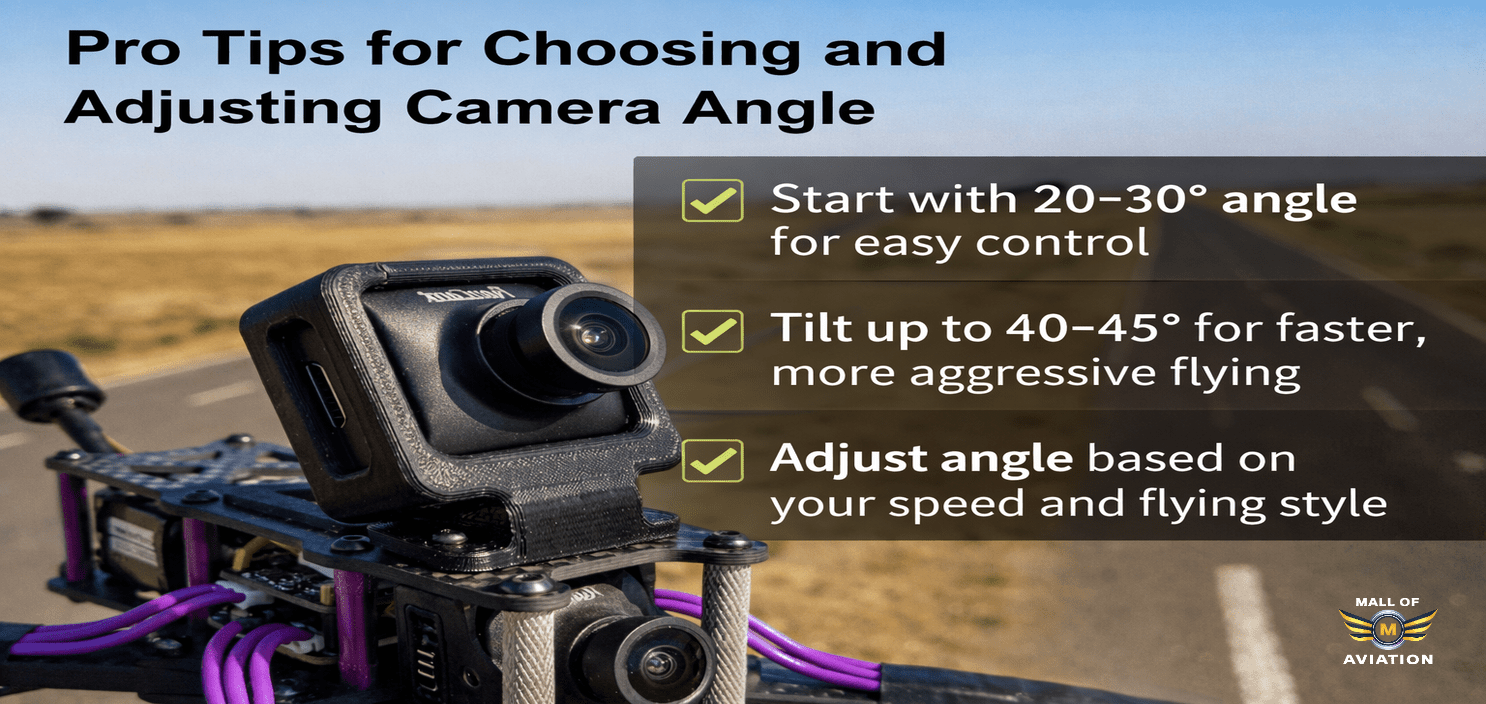
- Start low, increase gradually: Never make large jumps in angle. Increase by 3 to 5 degrees at a time and give yourself time to adapt.
- Match angle to flying style: Your camera angle for an fpv drones should match what you are doing. Use lower angles for technical flying and higher angles for speed.
- Different angles for different locations: A tight, technical bandos may require a lower angle. Open fields and racing tracks may benefit from higher angles.
- Test before each session: Make it a habit to visually check your camera angle for an fpv drones before flying, especially after crashes.
- Don’t copy others blindly: Your perfect angle is unique to you. Use other pilots’ settings as a starting point, but find what feels right for your hands and eyes.
Golden Rule: The best camera angle for an fpv drones is the one that makes you feel confident and in control. If you feel uncomfortable or disoriented, lower your angle until it feels natural again.
Frequently Asked Questions About Camera Angle for an FPV Drones
1. What is the best FPV camera angle for beginners?
The best camera angle for an fpv drones for beginners is between 10 and 15 degrees. This provides good forward visibility, easier hovering, and slower, more controllable flight.
2. Does my FPV angle setup affect speed?
Yes, indirectly. A higher camera angle for an fpv drones makes it easier to maintain high speeds because the drone naturally tilts forward. However, your drone’s maximum speed is determined by its power system.
3. Why do professional pilots use such high camera angles for an fpv drones?
Professional pilots use high camera angle for an fpv drones settings because they fly at very high speeds. A high angle keeps the horizon and obstacles in view when moving fast.
4. Is a low camera angle for an fpv drones better for freestyle?
Not necessarily. While some freestyle pilots prefer lower angles, most use a camera angle for an fpv drones between 25 and 30 degrees for the best balance of control and speed.
5. How often should I change my camera angle for an fpv drones?
You should adjust your camera angle for an fpv drones whenever your flying style or location changes. Many experienced pilots use different angles for racing, freestyle, and cinematic flying.
6. What is the relationship between FPV camera angle and action camera tilt?
For cinematic flying, it is important to match your FPV camera angle for an fpv drones with your action camera tilt. This ensures what you see in your goggles matches what is being recorded.
7. Can I use different camera angles for different drones?
Absolutely. Different drones have different power levels and handling characteristics. Adjust your camera angle for an fpv drones to match the drone and your intended flying style.
Final Thoughts: Finding Your Perfect Camera Angle for an FPV Drones
The journey to finding your ideal camera angle for an fpv drones is a personal one. There is no universal number that works for every pilot, every drone, or every flying style. The best camera angle for an fpv drones is the one that makes you feel confident, in control, and connected to your drone.
Start low as a beginner. A camera angle for an fpv drones of 10 to 15 degrees will give you the stability and visibility you need to learn the fundamentals. As you progress, gradually increase your angle in small increments. Pay attention to how the drone feels and how your confidence changes with each adjustment.
For freestyle, experiment in the 20 to 35 degree range. Most pilots find their sweet spot between 25 and 30 degrees. For racing, push higher—35 to 50 degrees—but only when you are ready for the speed. For cinematic flying, match your camera angle for an fpv drones to your action camera and the mood of the shot you want to capture.
Remember, your camera angle for an fpv drones is not permanent. It can and should evolve as you grow as a pilot. The perfect angle today may not be the perfect angle six months from now. Embrace the process of experimentation and trust your instincts.
At Mall of Aviation, we are committed to helping you build, learn, and fly better. Whether you are just starting your FPV journey or you are an experienced pilot looking to refine your setup, we are here to support you. Fly safe, have fun, and never stop exploring the skies.
Recommended Resources:
For more technical details on camera selection, visit Caddx FPV Official and DJI Official for the latest FPV camera technology.