New ALIEN Motor Revealed: Future of Drone Tech

FPV Drone Technology & Future Propulsion
New Alien Motor Revealed Future of Drone Tech: The Ferroelectric Prototype That Changes Everything
Drone Motor Technology • Future Propulsion • Mall of Aviation
Quick Summary:
The new alien motor revealed future of drone tech introduces a revolutionary ferroelectric prototype that eliminates magnets and copper coils entirely. Unlike traditional BLDC motors used in FPV drones, which rely on electromagnetic principles, this radical design uses ferroelectric materials and electrostatic forces to generate rotation. This post breaks down what this next-generation drone motor technology means for the FPV community, how it works, and how it could impact your next FPV drone build.
What if the next breakthrough in drone technology does not come from better magnets — but from eliminating them completely?
Every once in a while, something appears in the world of drone and motor technology that makes the entire community stop scrolling and pay attention. The recently revealed ferroelectric prototype motor — a device that has been dubbed the new alien motor revealed future of drone tech by the FPV community — is exactly that kind of moment. It does not have copper coils. It does not use permanent magnets. It does not work anything like the brushless motors currently spinning on every FPV quad, race drone, and commercial UAV on the planet.
Instead, this new alien motor revealed future of drone tech introduces a radically different concept powered by ferroelectricity — a cutting-edge principle from advanced materials science. If early demonstrations are accurate, this could represent the first genuinely new paradigm in drone motor technology in decades. At Mall of Aviation, we track emerging propulsion innovations closely — because understanding future technology is just as important as choosing the right FPV drone components. In this guide, you will discover how this new alien motor revealed future of drone tech works, how it compares to traditional BLDC motors, and whether it could shape the future of drones, robotics, and electric mobility.
Watch the Original Demonstration
New Alien Motor Revealed — Ferroelectric Prototype in Action
Pro Tip: Watch the full video to understand how this new alien motor revealed future of drone tech actually works — then continue below for a detailed breakdown.
What Is the New Alien Motor Revealed Future of Drone Tech?
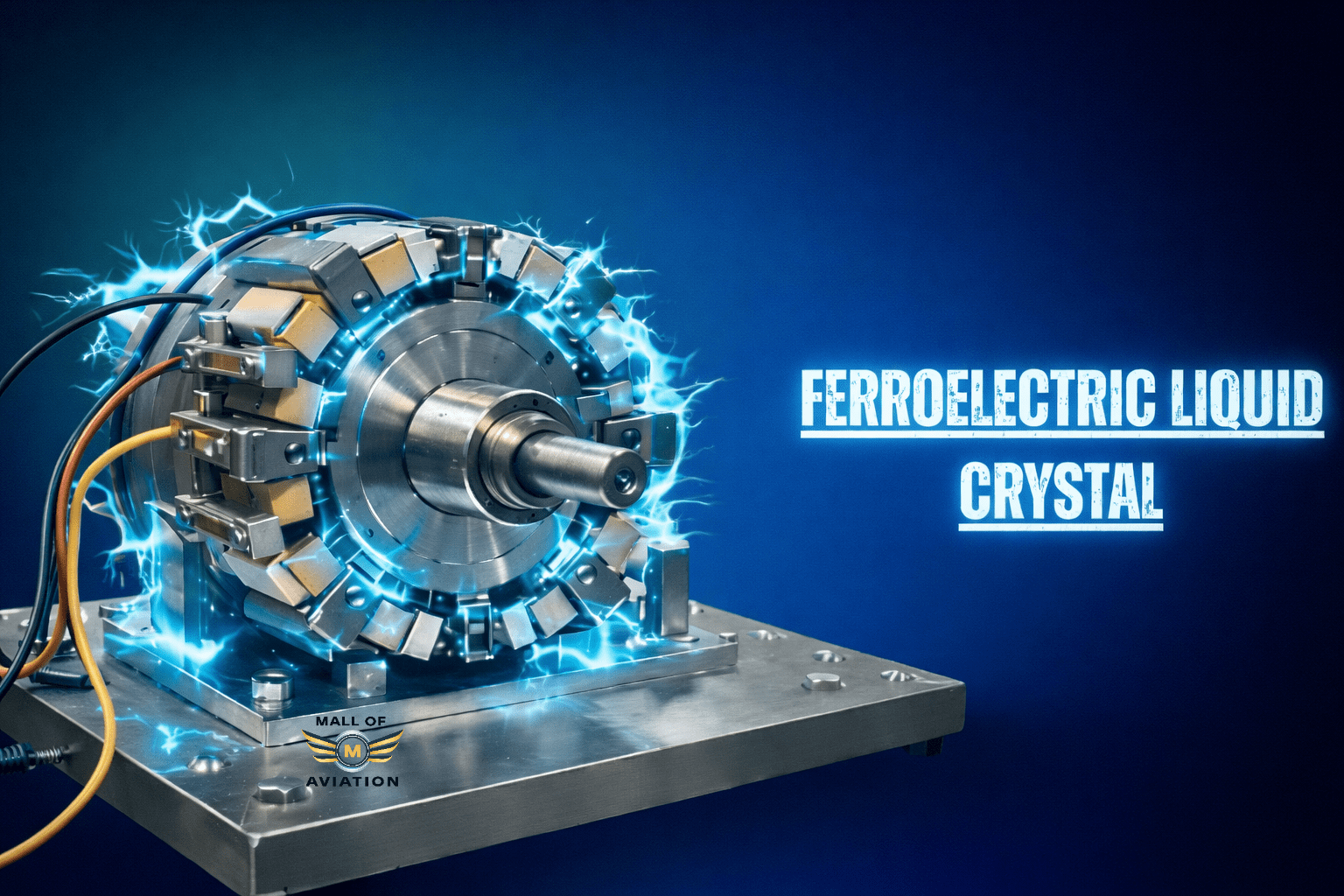
The ferroelectric motor prototype is a fundamentally different approach to converting electrical energy into rotational mechanical energy. Rather than using the interaction between magnetic fields generated by electric coils — which is the operating principle of every brushless DC motor currently in use — this new alien motor revealed future of drone tech uses the interaction between electric fields and specially engineered materials to produce motion.
The “alien” nickname is community-driven, and it is well-earned. When you look at this motor, there are no obvious coil windings, no permanent magnets, and no familiar stator-rotor configuration that drone pilots recognize. The design looks genuinely alien because the underlying physics it exploits are so different from mainstream electromagnetic motor design. This new alien motor revealed future of drone tech represents a complete departure from everything we know about drone propulsion.
The prototype demonstrated in the viral video showcases a device that uses ferroelectric materials — a class of materials that can be electrically polarized and can change their mechanical properties in response to applied electric fields — as the core mechanism for generating rotational force. The result is a motor concept that operates on electrostatic principles rather than electromagnetic ones.
Key Distinction: Traditional BLDC motors use magnetic fields (created by current through coils) interacting with permanent magnets to generate torque. The new alien motor revealed future of drone tech uses electric fields interacting with polarizable ferroelectric materials to generate motion — a fundamentally different physical mechanism.
How the New Alien Motor Revealed Future of Drone Tech Actually Works
Understanding Ferroelectricity in Plain Language
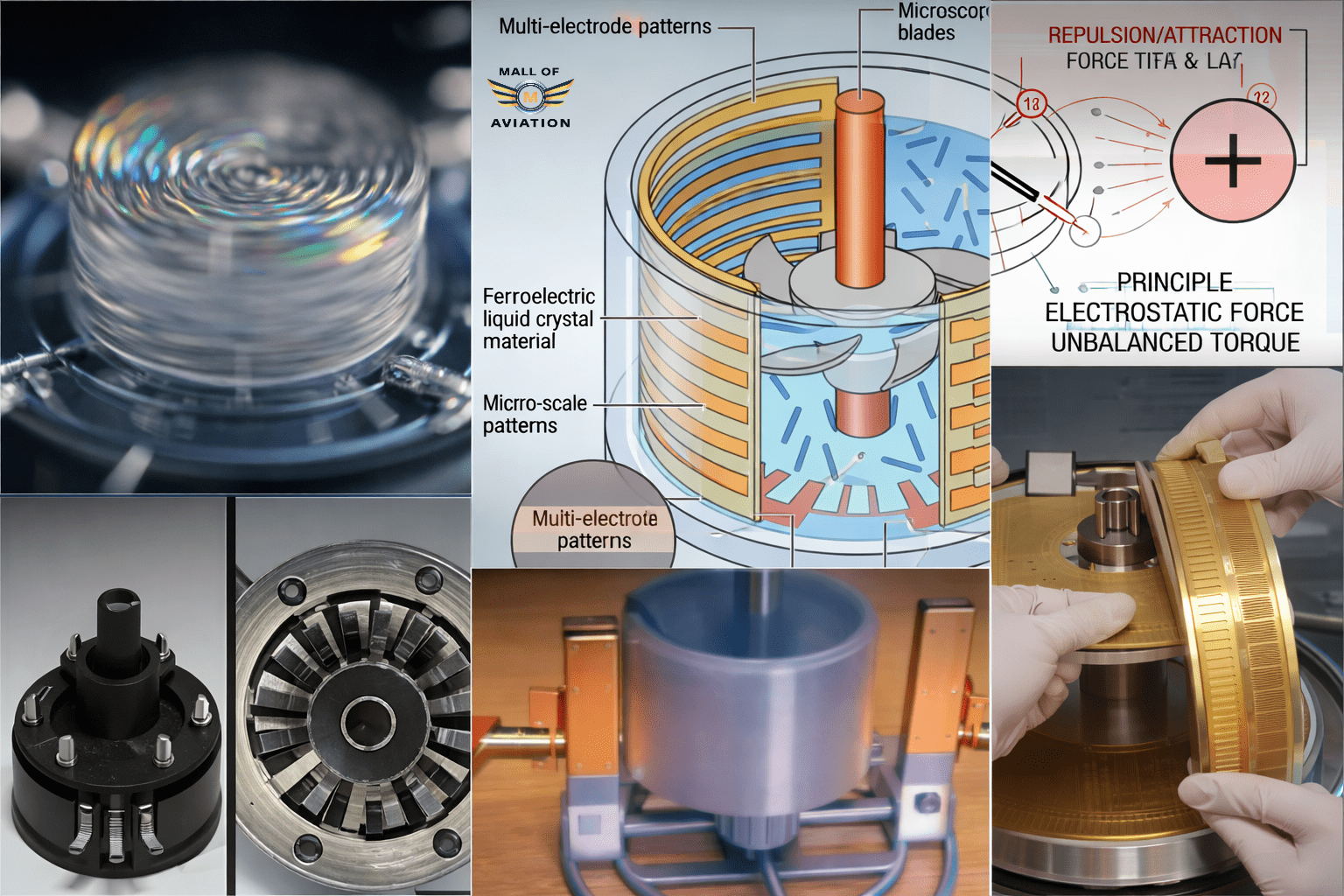
Ferroelectricity is a property of certain crystalline materials where the arrangement of atoms within the crystal creates a permanent electric dipole — a situation where one end of the crystal structure is slightly more positive and the other slightly more negative, even without an external electric field applied. This new alien motor revealed future of drone tech harnesses this property in ways never before applied to drone propulsion.
When you apply an external electric field to a ferroelectric material, several things happen: the material’s polarization can be switched (flipped to point in the opposite direction), and the material changes its physical dimensions slightly — a phenomenon called piezoelectric coupling. Different ferroelectric materials respond to electric fields in different ways, and researchers have been exploring how to exploit these responses to generate useful mechanical motion.
From Ferroelectric Effect to Rotational Motor
Converting the linear, microscopic dimensional changes of ferroelectric materials into continuous rotational motion is the engineering challenge at the heart of this new alien motor revealed future of drone tech. The approach demonstrated uses carefully sequenced electric field applications across multiple ferroelectric elements to create what is essentially an electrostatic traveling wave — a pattern of electric field activation that propagates around the rotor, pulling or pushing the ferroelectric rotor elements in a continuous rotational direction.
This is conceptually analogous to how a conventional BLDC motor uses a rotating magnetic field — but instead of magnetic fields and permanent magnets, this new alien motor revealed future of drone tech uses electric fields and polarizable ferroelectric materials. The physical principle is different, but the rotational output is the same goal.
How This New Alien Motor Differs from Traditional Drone Motors
To understand why this new alien motor revealed future of drone tech represents such a departure from current drone motor technology, it helps to quickly recap how BLDC motors work in FPV drones.
A conventional BLDC motor consists of a stator containing copper wire coils wound around iron laminations, and a rotor containing permanent magnets. When the ESC sends three-phase current through the stator coils, it creates a rotating magnetic field. The permanent magnets are attracted to and repelled by this rotating field, causing the rotor to spin.
The new alien motor revealed future of drone tech differs in every one of these fundamental characteristics:
| Characteristic | Traditional BLDC Motor | New Alien Motor (Ferroelectric) |
|---|---|---|
| Operating Principle | Electromagnetic | Electrostatic / Ferroelectric |
| Coil Windings | Yes — copper wire coils essential | No — no copper windings needed |
| Permanent Magnets | Yes — rare earth magnets required | No — ferroelectric materials instead |
| Heat Generation | Significant — resistive losses in copper | Potentially very low — no resistive current |
| Rare Earth Dependency | High — neodymium magnets essential | Potentially none |
Potential Advantages of the New Alien Motor Technology
If this new alien motor revealed future of drone tech can be developed into a practical, production-ready system, the theoretical advantages over conventional BLDC technology are genuinely compelling:
No Rare Earth Magnets
One of the most significant supply chain vulnerabilities in modern drone manufacturing is the dependence on rare earth elements — specifically neodymium, used in the permanent magnets of virtually every BLDC motor. The new alien motor revealed future of drone tech eliminates this dependency entirely, potentially transforming motor manufacturing economics and strategic independence.
Dramatically Lower Heat Generation
In a conventional BLDC motor, heat is generated primarily through resistive losses as current flows through copper coil windings. The new alien motor revealed future of drone tech operates without large currents flowing through resistive conductors, meaning theoretical heat generation is far lower. Less heat means longer motor life, no need for complex thermal management, and higher efficiency.
Ultra-Thin and Flexible Form Factors
Because ferroelectric motors are not constrained by the need to wind copper wire around iron cores, this new alien motor revealed future of drone tech could enable motor form factors impossible with conventional BLDC design — ultra-thin disc motors, flexible distributed actuator arrays, and integrated structural motors built directly into frames.
Challenges Facing the New Alien Motor Revealed Future of Drone Tech
While the new alien motor revealed future of drone tech is exciting, it is equally important to understand the significant challenges standing between a laboratory prototype and a production motor for your FPV drone:
Extremely Early Stage
The prototype is a proof-of-concept device — showing that the fundamental physics can produce rotation, not that a practical, efficient, reliable motor has been achieved. The gap between “it rotates in a lab” and “it outperforms a BLDC motor” is measured in years to decades of engineering refinement.
Power Density Questions
Current ferroelectric actuators generally produce very low power density compared to electromagnetic motors. For drone applications specifically, power density is critical — a motor that is heavier or larger than an equivalent BLDC motor provides no practical advantage. Overcoming this power density gap is the central engineering challenge for this new alien motor revealed future of drone tech.
High Voltage Requirements
Ferroelectric actuation typically requires significantly higher voltages than electromagnetic motors. While LiPo batteries used in FPV drones typically operate in the 12–50V range, ferroelectric actuators often require hundreds or even thousands of volts — introducing significant power electronics complexity and safety concerns.
Where the New Alien Motor Could First Appear
While the path to FPV drone applications is long, there are specific use cases where this new alien motor revealed future of drone tech could find earlier practical application:
Micro and Nano Drones
At very small scales — sub-10 gram drones and insect-scale flying robots — conventional electromagnetic motors face fundamental physical scaling challenges. Electrostatic actuation principles actually scale more favorably to very small sizes, meaning the first practical applications of this new alien motor revealed future of drone tech may appear in 5-inch FPV drone builds.
Precision Robotics and Aerospace Actuators
The high-torque, low-speed characteristics of ferroelectric actuators make them attractive for robotic joints, surgical robotics, and aerospace control surface actuation — applications where their unique characteristics offer clearer advantages over traditional motors.
What the New Alien Motor Revealed Future of Drone Tech Means for Pilots Today
The honest answer is: not much, immediately. This new alien motor revealed future of drone tech is genuinely exciting science — a rare glimpse of a completely different approach to propulsion that challenges assumptions the industry has held for over a century. But it is also very much a laboratory curiosity at this stage, separated from practical drone applications by years of engineering development.
What makes this prototype worth paying attention to is not that it will replace the motor in your freestyle build next year. It is that it demonstrates the universe of possible approaches to propulsion is much wider than the BLDC motors we have optimized for decades. At Mall of Aviation, we believe staying informed about emerging technology is part of being a serious drone enthusiast — even when that technology is years from reaching your propeller collet.
Frequently Asked Questions About the New Alien Motor
What is the new alien motor revealed future of drone tech?
The new alien motor revealed future of drone tech is a ferroelectric prototype motor that operates on electrostatic principles rather than electromagnetic ones. It eliminates copper coils and permanent magnets entirely, using ferroelectric materials to generate rotational motion through electric field interactions.
Why is it called the “alien” motor?
The nickname was coined by the drone community after the prototype video went viral, because the motor looks completely unlike any conventional motor design. With no visible coil windings, no permanent magnets, and an operating principle completely foreign to anyone familiar with BLDC motors, it genuinely looks like technology from another world.
Will this new alien motor ever be used in FPV drones?
It is possible but very uncertain and likely many years away. The new alien motor revealed future of drone tech currently faces significant challenges including low power density, high voltage requirements, and manufacturing complexity that must all be resolved before it could compete with optimized BLDC motors in FPV applications.
What are the biggest advantages of this new motor technology?
The theoretical advantages include: no requirement for rare earth magnets, potentially much lower heat generation, unique form factor flexibility, and favorable scaling characteristics at very small sizes. However, these are largely theoretical — whether they can be realized in a practical motor is the central engineering challenge.
Where can I watch the original ferroelectric motor video?
The original video is embedded at the top of this article. You can also find it directly on YouTube by searching for the new alien motor revealed future of drone tech or by visiting the channel that originally published the demonstration.
Recommended Resources:
For more technical details on ferroelectric materials and advanced motor technology, visit Nature Materials and IEEE Xplore for peer-reviewed research papers.