
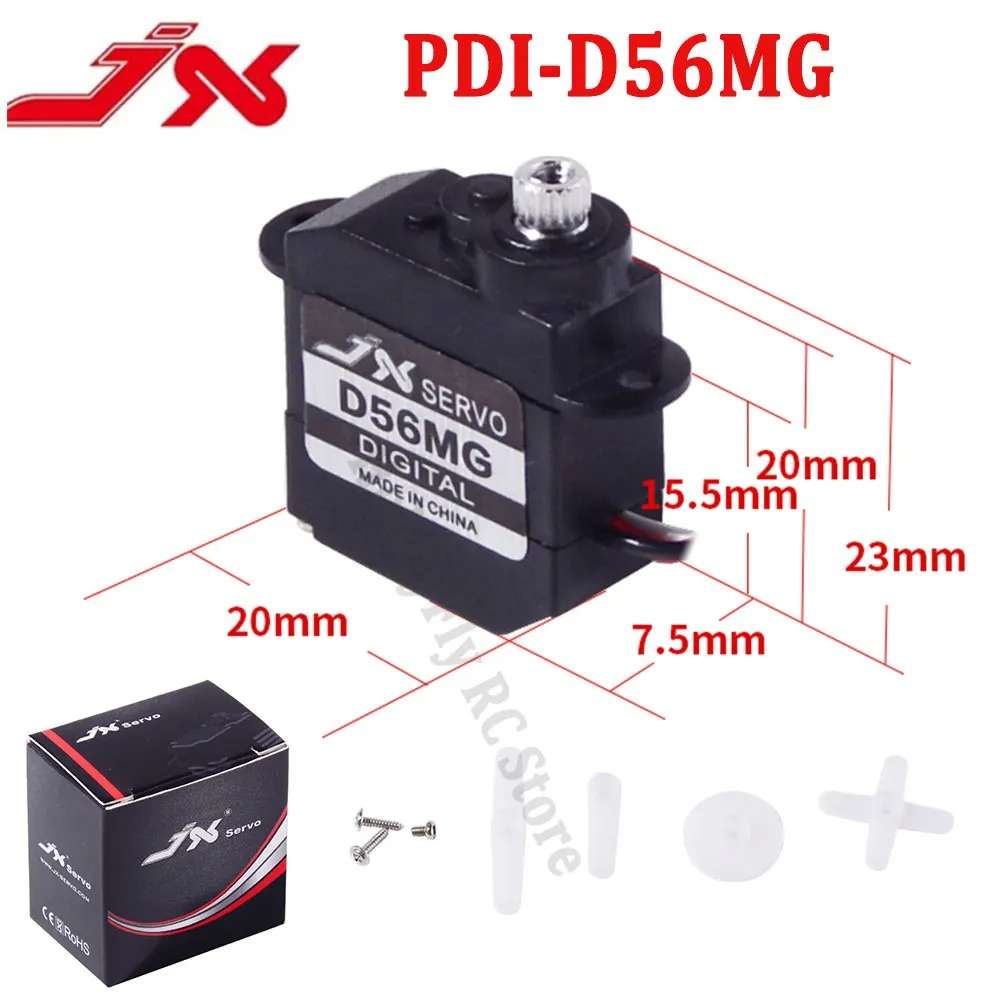
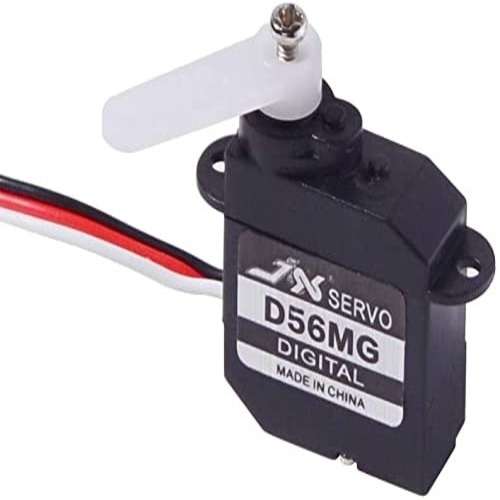
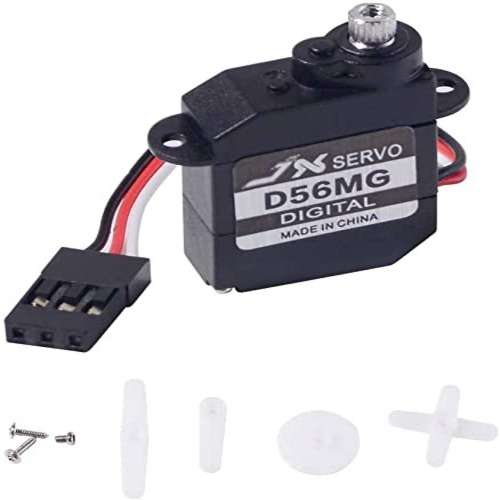
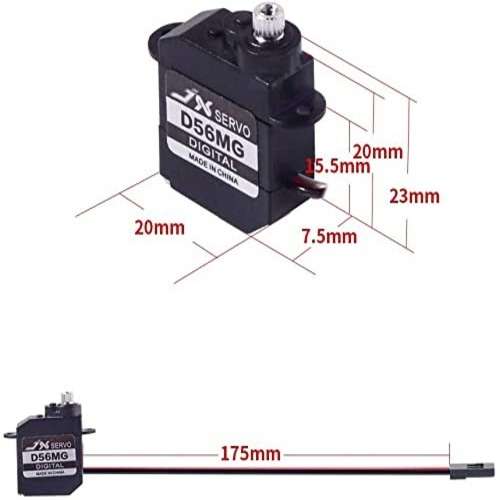
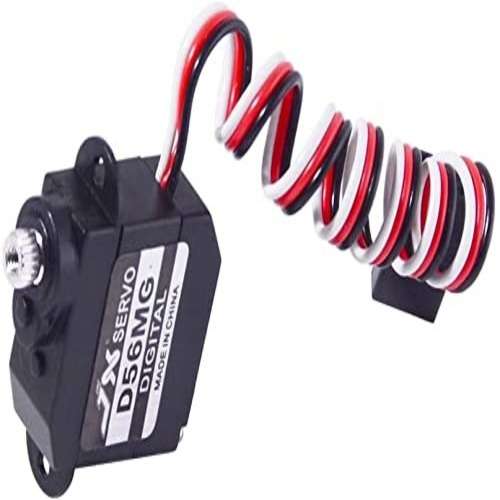


Digital Servo with metal gear JX Servo D56MG 5.6g
Digital servo JX D56MG is a compact metal gear micro servo designed for precise control in RC models, robotics, and Arduino projects. It offers fast response, high accuracy, and reliable performance, making it ideal for lightweight applications requiring smooth and stable movement.
- Estimated Delivery : Up to 4 business days
JX D56MG Metal Gear Micro Digital Servo for RC & Robotics
Digital servo technology has revolutionized precision control in RC models and robotics projects. The JX D56MG is a high-performance micro unit designed for applications requiring accuracy, durability, and fast response. Built with a coreless motor and robust metal gears, this component delivers smooth movement and reliable positioning even in demanding conditions. Whether you are building an RC airplane, a robotic arm, or an Arduino project, this precision device provides the control you need.
This precision control unit is engineered for users who need lightweight yet powerful components. With its compact size and efficient design, it is ideal for small drones, RC airplanes, helicopters, and robotic mechanisms where precision and responsiveness are critical. Whether you are a hobbyist or a professional, this device offers consistent performance across various applications. The advanced electronics inside ensure faster response times compared to traditional analog alternatives.
In This Guide
Key Features of This Digital Servo
This precision control unit comes with several features that make it stand out from standard servos. Here are the key specifications that users appreciate:
- High precision positioning: Accurate control for applications requiring exact movement
- Durable metal gear system: Long-lasting performance even under continuous load
- Coreless motor design: Smooth and fast response with reduced inertia
- Lightweight construction: Only 5.6g, ideal for compact and weight-sensitive builds
- Wide compatibility: Works with Arduino, RC systems, and robotics platforms
- Efficient power usage: Stable torque output without excessive battery drain
How a Digital Servo Works
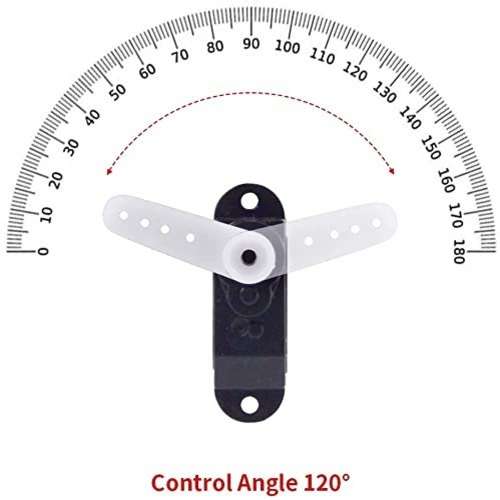
Understanding how a digital servo operates helps users get the most out of their equipment. This component uses pulse width modulation (PWM) signals to control the position of its shaft. The controller sends a signal, and the unit moves to the corresponding angle based on the pulse width.
Unlike analog servos, which receive signals at a lower frequency, this device processes signals more frequently. This results in faster response times and improved holding torque, making it suitable for applications requiring high accuracy and quick adjustments.
The advanced circuitry maintains consistent performance even during rapid directional changes. When the control signal changes, the unit reacts almost instantly, providing smooth and predictable movement patterns.
Digital Servo Applications in RC & Robotics
This precision control unit is widely used across various fields where precise motion control is required. Here are some common applications:
- RC airplanes and helicopters: Controls ailerons, elevators, and rudders
- RC cars and boats: Handles steering and throttle control
- Robotic arms: Manages joint movement and positioning
- Arduino projects: Powers interactive installations
- Camera gimbals: Provides stabilization and angle adjustment
- Small drones: Controls payload release mechanisms
If you are building advanced projects, you can explore our electronics modules and sensors to enhance your system performance alongside this precision device.
Advantages of Metal Gear Construction
One of the key advantages of this precision control unit is its metal gear construction. Metal gears provide significantly higher durability compared to plastic gears, making the unit more resistant to wear and mechanical stress. This is especially important in applications where the component is subjected to continuous movement and load.
The benefits of metal gears include:
- Increased lifespan: Resists stripping and deformation under load
- Higher torque capacity: Handles more force without failure
- Better impact resistance: Survives crashes and hard landings better
- Consistent performance: Maintains accuracy even after extended use
The coreless motor further improves efficiency by reducing inertia, allowing faster acceleration and smoother operation. Together, these features ensure reliable performance over extended periods, making this component a favorite among RC enthusiasts and robotics engineers.
Technical Specifications
Here are the complete technical specifications for this precision control unit:
- Model: JX D56MG Digital Servo
- Type: Micro precision unit with high-speed processing
- Motor Type: Coreless for reduced inertia
- Gear Type: Metal Gear for durability
- Operating Voltage: 3.7V to 5.5V
- Torque: 0.89 kg·cm at 5V
- Speed: 0.10 seconds per 60 degrees
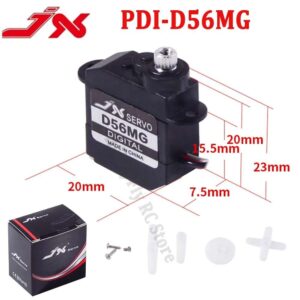
- Weight: 5.6 grams
- Dimensions: 19.8 mm × 8.2 mm × 20 mm
- Connector Type: Standard 3-pin JR/Futaba compatible
Using with Arduino and Microcontrollers
This precision control unit can be easily integrated with Arduino boards and other microcontroller platforms. The integration process is straightforward and well-documented, making it accessible for beginners and experienced developers alike.
Basic connection steps:
- Connect the brown or black wire to ground (GND)
- Connect the red wire to 5V power supply
- Connect the orange or yellow wire to a PWM-capable digital pin
- Upload a servo control sketch to your Arduino board
- Use the Servo.h library to write angles to the component
By connecting the signal wire to a PWM pin, users can control the position programmatically. This makes it ideal for automation systems, robotic arms, interactive art installations, and educational projects. The library handles the complex timing requirements, allowing users to focus on higher-level functionality.
Performance Tips for Best Results
To get the most out of your precision control unit, consider these performance tips:
- Use a stable power supply: Voltage drops can cause erratic behavior
- Avoid exceeding torque limits: Overloading can damage the gears
- Secure mounting: Proper mounting prevents shifting during operation
- Keep away from heat sources: Excessive heat affects performance
- Test before final assembly: Verify operation in your specific application
Frequently Asked Questions
1. What is a digital servo and how does it differ from analog servos?
A digital servo is a compact precision control device designed for smaller applications. The JX D56MG is a digital unit that offers faster response times and better holding torque compared to analog alternatives. It processes signals at a much higher frequency, making it ideal for mini RC planes and small robots.
2. What is the difference between digital and analog servos?
A digital servo processes signals at a much higher frequency (300Hz or more) compared to analog servos (50Hz). This results in faster response, better holding torque, smoother movement, and more precise positioning. The main trade-off is slightly higher power consumption, which is usually negligible for most applications.
3. Can I use this component with Arduino?
Yes, this precision unit is fully compatible with Arduino and other microcontrollers. The Servo.h library provides simple functions to control the position. You can power it directly from the Arduino 5V pin for testing, but for multiple units, use an external power supply.
4. Is metal gear better than plastic gear for servos?
Yes, metal gears make a unit significantly more durable and suitable for high-load applications. Plastic gears can strip under stress, especially in crashes. A metal gear unit resists wear better, lasts longer, and handles higher torque loads. The JX D56MG uses metal gears for enhanced durability.
5. What voltage should I use for optimal performance?
This component operates optimally between 4.8V and 5.5V. At 5V, it delivers the rated torque and speed. Lower voltages reduce torque output, while higher voltages may damage the internal electronics. Always stay within the specified voltage range for reliable operation.
6. How do I troubleshoot if the unit is not working?
First, check all connections, especially the ground and power wires. Verify that your code is correct and the signal pin is PWM-capable. Test with a simple sweep sketch to isolate the issue. If the unit twitches but doesn’t move, check for mechanical binding or insufficient power supply current.
7. What is the lifespan of this component?
With proper use and within specified limits, this unit can last for thousands of cycles. The metal gears resist wear, and the coreless motor has a long operational life. Avoid exceeding torque limits, and keep the unit clean and free from debris for maximum longevity.
For more technical details about digital servo motor working principles, refer to this comprehensive resource on servo mechanisms to better understand how your precision device operates.
Note: Product color may vary based on availability. All specifications are subject to change without notice.
Be the first to review “Digital Servo with metal gear JX Servo D56MG 5.6g”
You may also like…
-
-
Digital Vernier Calipers
₹1,599 -
-



Reviews
There are no reviews yet.