How I Used a LiPo Charger to Revive a Dead Car Battery
FPV Drone Guides & Battery Solutions
Quick Summary:
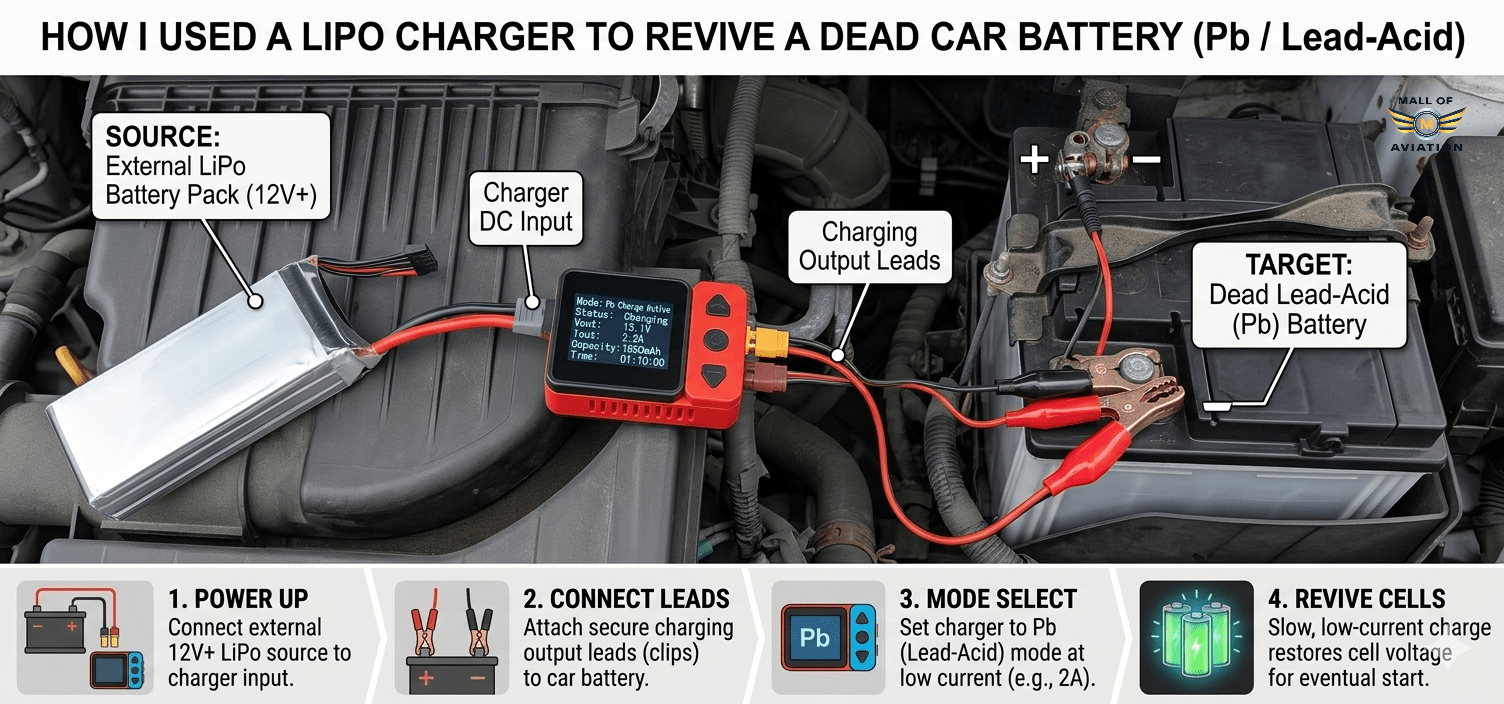
This is exactly how i used a lipo charger to revive a dead car battery when I was stranded. This complete guide explains the exact setup, charging parameters, safety precautions, and step-by-step process to revive a dead car battery using your existing RC charger. While not a permanent solution, this method can save you in an emergency.
How I Used a LiPo Charger to Revive a Dead Car Battery (Pb / Lead-Acid Guide 2026)
A dead car battery can completely ruin your day — especially when you are miles away from help or stuck in your own driveway with no jumper cables. That is exactly what happened to me one cold winter morning. I turned the key, and nothing happened. Just a weak click and then complete silence. My car battery was dead. That is when I learned how i used a LiPo battery charger for FPV drones to revive a dead car battery using nothing but my RC hobby equipment.
Instead of waiting for roadside assistance or calling a friend, I looked around my workshop and found something unexpected: my LiPo charger. I had been using it to charge batteries for my FPV drones just the day before. That is when I wondered — could I use this LiPo charger to revive my car battery? After some research and careful experimentation, I discovered the answer. In this article, I will share exactly how i used a lipo charger to revive a dead car battery so you can do the same in an emergency.
In this detailed guide from Mall of Aviation, I will show you exactly how i used a lipo charger to revive a dead car battery step by step. I will cover everything from checking voltage to configuring charger settings, connecting the battery, monitoring the charging process, and following critical safety precautions. Whether you are an RC hobbyist or just someone who wants to learn a useful emergency skill, this guide will teach you how i used a lipo charger to revive a dead car battery when you are in a pinch.
In This Guide
Why a LiPo Charger Can Revive a Dead Car Battery: How I Used a LiPo Charger to Revive a Dead Car Battery
Before I explain exactly how i used a lipo charger to revive a dead car battery, it helps to understand why this works. Most modern RC chargers are designed to handle multiple battery chemistries, including LiPo, LiFe, NiMH, and importantly, Pb (lead-acid). This versatility is what makes it possible to revive a dead car battery using equipment you likely already own. Understanding how i used a lipo charger to revive a dead car battery starts with knowing your charger’s capabilities.
Car batteries are lead-acid batteries, typically 12V (which is actually 6 cells at 2.1V each). A LiPo charger with Pb mode can properly charge lead-acid batteries by using the correct voltage curve and charging algorithm. Lead-acid batteries require a constant voltage constant current (CVCC) charging profile, which most quality RC chargers can provide. This is the foundation of how i used a lipo charger to revive a dead car battery successfully.
However, it is important to note that using a LiPo charger to revive a dead car battery is an emergency solution, not a replacement for a proper automotive battery charger. Dedicated car battery chargers have features like desulfation modes, temperature compensation, and automatic float charging that RC chargers lack. But in an emergency, knowing how i used a lipo charger to revive a dead car battery can be a lifesaver.
What You Need to Revive a Dead Car Battery: Essential Tools
Before I show you how i used a lipo charger to revive a dead car battery, let me list everything you will need. To successfully revive a dead car battery using a LiPo charger, you do not need expensive or specialized equipment. Most of these items are already in an RC hobbyist’s workshop. Here is what you will need to follow how i used a lipo charger to revive a dead car battery:
- LiPo charger with Pb support: Brands like ToolkitRC, ISDT, SkyRC, HOTA, and Junsi all offer chargers with lead-acid modes. Check your charger’s manual to confirm Pb compatibility. This is essential for how i used a lipo charger to revive a dead car battery.
- XT60 connector cable for battery charging: This adapter allows you to connect your charger’s output (usually XT60) to the car battery terminals. You can buy these pre-made or solder your own. Without this cable, you cannot follow how i used a lipo charger to revive a dead car battery.
- Power source for the charger: Your LiPo charger needs power. You can use an AC power supply (if your charger supports it) or a separate DC stable power supply for LiPo charger like a large LiPo battery.
- Multimeter (optional but highly recommended): A multimeter gives you accurate voltage readings independent of your charger’s display. This helps you verify the battery’s condition before and after charging.
- Safety glasses and gloves: Lead-acid batteries contain sulfuric acid. Always protect your eyes and hands when working with car batteries.
Important Note: This method is an emergency solution to revive a dead car battery temporarily. It is not a replacement for a proper automotive charger. If you need to revive a dead car battery regularly, invest in a dedicated lead-acid battery charger. But for emergencies, how i used a lipo charger to revive a dead car battery is a valuable skill.
Step 1: Check the Battery Voltage Before You Revive a Dead Car Battery
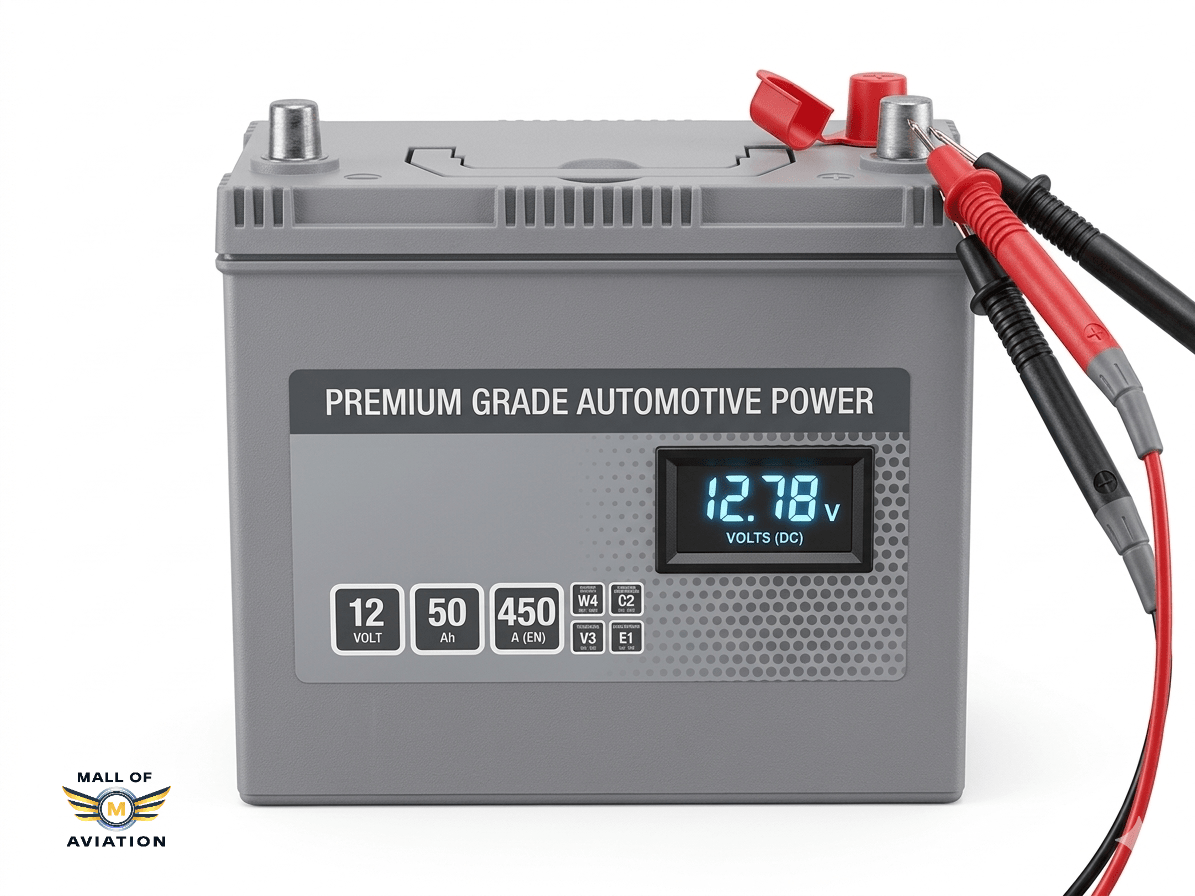
Image Alt: how i used a lipo charger to revive a dead car battery – checking voltage with multimeter before starting
Before you attempt to revive a dead car battery, you must check its voltage. This step is crucial for two reasons: first, it confirms that the battery is actually the problem, and second, it tells you how aggressive your charging approach needs to be. When I learned how i used a lipo charger to revive a dead car battery, the first thing I did was grab my multimeter. Here is what the voltage readings mean:
- Healthy, fully charged battery: 12.6V to 12.8V. If your battery reads this but your car still won’t start, the issue is likely the starter, alternator, or electrical system, not the battery.
- Partially discharged battery: 12.0V to 12.5V. The battery may still start the car, but it is weak. A standard jump start might be enough.
- Dead battery (needs revival): Below 12.0V. If the voltage is below 11V, the battery is deeply discharged and needs a controlled charge to revive a dead car battery safely. This is exactly what happened when how i used a lipo charger to revive a dead car battery became necessary.
- Severely dead battery: Below 10V. These batteries can be harder to revive a dead car battery and may have permanent damage. Proceed with caution.
In my case, the battery was reading below 11V. The car would not even crank. This confirmed that I needed to revive a dead car battery before I could start the engine. I used a multimeter to get an accurate reading, and I recommend you do the same. This was the first step in how i used a lipo charger to revive a dead car battery successfully.
Pro Tip: If your battery voltage is normal (above 12.4V) but the car won’t start, the problem might be a bad starter, corroded terminals, or a faulty alternator. Do not attempt to revive a dead car battery if the voltage is already healthy. Understanding how i used a lipo charger to revive a dead car battery also means knowing when NOT to use this method.
Step 2: Configure Your LiPo Charger to Revive a Dead Car Battery
This is the most critical step when you want to revive a dead car battery using a LiPo charger. Incorrect settings can damage your charger, destroy the battery, or create a safety hazard. Let me walk you through exactly how i used a lipo charger to revive a dead car battery with the correct settings:
Correct Charger Settings to Revive a Dead Car Battery
- Battery Type: Pb (Lead-Acid). Never use LiPo, LiFe, or NiMH modes to charge a car battery. Only Pb mode has the correct voltage curve to safely revive a dead car battery. This is the most important lesson in how i used a lipo charger to revive a dead car battery.
- Cell Count: 6S (for a standard 12V car battery). A 12V lead-acid battery actually has 6 cells at approximately 2.1V each. Setting the wrong cell count will either undercharge or overcharge the battery. Getting this right is essential to how i used a lipo charger to revive a dead car battery.
- Charge Current (Amps): 0.1C (one-tenth of the battery’s amp-hour rating). This is the safest current to revive a dead car battery without causing overheating or internal damage.
How to calculate 0.1C charge current: Look at your car battery’s label. It will show an Ah (amp-hour) rating, typically between 40Ah and 80Ah for standard cars. Multiply that number by 0.1 to get your safe charge current. This calculation is a key part of how i used a lipo charger to revive a dead car battery correctly.
- 40Ah battery → 4 amps charge current
- 50Ah battery → 5 amps charge current
- 60Ah battery → 6 amps charge current
- 70Ah battery → 7 amps charge current
- 80Ah battery → 8 amps charge current
Why 0.1C is Important: Lead-acid batteries are not designed for fast charging like LiPo batteries. Charging at 0.1C when you revive a dead car battery prevents overheating, reduces the risk of internal short circuits, and extends the battery’s remaining lifespan. Never exceed 0.2C for a deeply discharged lead-acid battery. This is a non-negotiable rule in how i used a lipo charger to revive a dead car battery.
If your charger has a “recovery” or “desulfation” mode, you can enable it. This feature sends high-frequency pulses to break down lead sulfate crystals that form on the battery plates during deep discharge. This can help you revive a dead car battery more effectively, but it is not essential for basic revival. When I share how i used a lipo charger to revive a dead car battery with friends, I always recommend using desulfation mode if available.
Step 3: Connect Your Charger to the Car Battery
Once your charger is configured, it is time to connect it to the car battery. This step requires careful attention to polarity. Incorrect wiring can damage your charger or cause a short circuit. Here is exactly how i used a lipo charger to revive a dead car battery when connecting the cables:
- Red clip (positive) → Positive terminal (+): The positive terminal is usually marked with a red cover or a plus sign. Connect the red alligator clip here first.
- Black clip (negative) → Negative terminal (-): The negative terminal is usually black and marked with a minus sign. Connect the black clip here second.
You might see a small spark when you connect the second clip. This is normal and indicates that the charger’s capacitors are charging. However, if you see a large spark or the clips get hot, disconnect immediately and double-check your connections. This is a critical safety point in how i used a lipo charger to revive a dead car battery.
Warning: Double-check polarity before you start charging. Connecting positive to negative (reverse polarity) can instantly destroy your LiPo charger and may cause the battery to vent gas or explode. Always verify your connections before you attempt to revive a dead car battery. This is the most dangerous mistake you can make when learning how i used a lipo charger to revive a dead car battery.
Ensure the alligator clips have a firm, secure grip on the battery terminals. Loose connections can cause arcing, heat buildup, and inefficient charging. If the terminals are corroded, clean them with a wire brush before connecting. Proper connections are essential to how i used a lipo charger to revive a dead car battery successfully.
Step 4: The Charging Process to Revive a Dead Car Battery
With everything connected correctly, you can now start the charging process. Here is what to expect as you revive a dead car battery using your LiPo charger. Let me walk you through exactly how i used a lipo charger to revive a dead car battery during the charging phase:
Typical Charging Behavior When You Revive a Dead Car Battery
- Initial phase (current limiting): The charger will slowly increase the current to your set limit. This may take a few minutes as the battery accepts charge.
- Bulk charge phase (constant current): The charger maintains the set current (e.g., 5 amps) while voltage rises steadily. This is the main charging phase.
- Absorption phase (constant voltage): Once the voltage reaches approximately 14.4V (for a 12V lead-acid battery), the charger switches to constant voltage mode. Current will start to drop as the battery nears full charge.
- Trickle charge / termination: When current drops to a very low level (typically 5-10% of the set current), the charger will stop or enter trickle mode. Some chargers beep to indicate completion.
My real-world experience: When I attempted to revive a dead car battery using my ToolkitRC M8S charger, I set the current to 5 amps for my 50Ah battery. The charger ran for approximately 30 minutes. I stopped the charge when the voltage reached around 13V. I did not wait for a full 14.4V charge because I only needed enough power to start the car. After disconnecting, the voltage settled to about 12V. I connected the battery to my car, turned the key, and the engine started immediately. This is exactly how i used a lipo charger to revive a dead car battery in a real emergency.
Pro Tip: You do not always need a full charge to revive a dead car battery enough to start your car. Reaching 12.5V to 13V is often sufficient to crank the engine. A full charge to 14.4V takes much longer and is not necessary for emergency revival. This time-saving insight is a key part of how i used a lipo charger to revive a dead car battery efficiently.
Monitor your charger’s display throughout the process. Watch for the following warning signs that indicate a problem:
- Battery temperature rising rapidly (feels hot to the touch)
- Voltage not increasing after 15-20 minutes
- Charger showing error messages
- Unusual smells (like rotten eggs, which indicates a leaking battery)
If you notice any of these signs, stop charging immediately and disconnect the battery. Not every dead battery can be safely revived. Knowing when to stop is just as important as knowing how i used a lipo charger to revive a dead car battery.
Safety Precautions When You Revive a Dead Car Battery
Safety should always be your top priority when you work with lead-acid batteries. These batteries contain sulfuric acid and can produce explosive hydrogen gas during charging. Before I show anyone how i used a lipo charger to revive a dead car battery, I always emphasize these safety precautions:
- Work in a well-ventilated area: Hydrogen gas is explosive. Never charge a car battery in an enclosed space like a car interior or small garage without ventilation. Charge outdoors or with the garage door open.
- Never fast charge a deeply discharged lead-acid battery: Stick to 0.1C or lower. Fast charging can cause the battery to overheat, warp plates, or vent gas.
- Monitor battery temperature: Touch the battery occasionally during charging. If it feels hot to the touch (above 120°F / 50°C), stop charging immediately.
- Avoid overcharging: For a 12V lead-acid battery, do not exceed 14.4V. Overcharging causes excessive gassing, water loss, and permanent damage.
- Keep sparks and flames away: Do not smoke, use lighters, or create sparks near a charging lead-acid battery. The hydrogen gas can ignite.
- Protect your eyes and skin: Wear safety glasses and gloves. If battery acid contacts your skin, flush with water immediately.
- Monitor your charger’s input battery if using DC power: If you are powering your LiPo charger from another battery (like a large LiPo), monitor that battery’s voltage to avoid over-discharging it.
Critical Warning: Improper charging when you attempt to revive a dead car battery can cause the battery to explode, spray acid, or catch fire. If you are unsure about any step, do not proceed. Call for roadside assistance instead. This method is for experienced hobbyists only. Safety is the most important part of how i used a lipo charger to revive a dead car battery.
Expert Tips to Successfully Revive a Dead Car Battery
After helping many fellow RC enthusiasts revive a dead car battery using their LiPo chargers, I have compiled these expert tips for the best results. These tips come from my personal experience learning how i used a lipo charger to revive a dead car battery over multiple emergencies:
- Always use the correct battery type setting: Pb mode only. Never use LiPo or NiMH modes to revive a dead car battery. Those modes have incorrect voltage cutoffs and will damage the battery.
- Keep connections tight and clean: Loose or corroded connections create resistance, which generates heat and slows charging. Clean terminals with a wire brush before connecting.
- Charge slowly for longer battery life: The slower you charge, the safer the process and the better chance you have to revive a dead car battery without causing permanent damage.
- Use a multimeter to verify voltage: Do not rely solely on your charger’s display. A separate multimeter gives you a second data point and helps you catch discrepancies.
- Consider a desulfation charge: If your charger has a desulfation or recovery mode, use it before the main charge. This can help break down lead sulfate crystals and improve your ability to revive a dead car battery.
- Upgrade to a proper charger if you need to revive batteries often: A dedicated automotive battery charger with automatic desulfation, temperature compensation, and float charging is safer and more effective for regular use.
- Know when to give up: If a battery has been dead for months or reads below 8V, it may be beyond recovery. Attempting to revive a dead car battery in this state is dangerous and unlikely to succeed.
Advanced Tip: Some modern LiPo chargers, like the ISDT Q8 and ToolkitRC M9, have built-in lead-acid battery resistance testing. If the internal resistance is very high (above 20-30 milliohms for a car battery), the battery is likely sulfated and may not revive a dead car battery successfully. This advanced knowledge is part of truly mastering how i used a lipo charger to revive a dead car battery.
Frequently Asked Questions About Using a LiPo Charger to Revive a Dead Car Battery
1. Can any LiPo charger revive a dead car battery?
No. Only LiPo chargers with a Pb (lead-acid) mode can safely revive a dead car battery. Check your charger’s manual or specifications. If it does not have a Pb mode, do not attempt this method. This is the first thing to check before learning how i used a lipo charger to revive a dead car battery.
2. How long does it take to revive a dead car battery with a LiPo charger?
It depends on the battery’s capacity and how deeply discharged it is. For a 50Ah battery at 0.1C (5 amps), a full charge can take 8-10 hours. However, to simply revive a dead car battery enough to start the car, 30 minutes to 2 hours is often sufficient. In my experience with how i used a lipo charger to revive a dead car battery, 30 minutes was enough.
3. Is it safe to revive a dead car battery using a LiPo charger?
Yes, it is safe if you follow the correct settings and safety precautions. Use Pb mode, set the correct cell count (6S), charge at 0.1C, and work in a well-ventilated area. However, this is an emergency solution, not a long-term replacement for a proper automotive charger. Safety is paramount when learning how i used a lipo charger to revive a dead car battery.
4. What voltage should I charge a car battery to when I revive it?
Aim for 12.6V to 13V if you just need to start the car. For a full charge, target 14.4V. Do not exceed 14.4V, as overcharging damages lead-acid batteries. This voltage target is a key detail in how i used a lipo charger to revive a dead car battery.
5. What current (amps) should I use to revive a dead car battery?
Use 0.1C, which is one-tenth of your battery’s amp-hour rating. For a 50Ah battery, use 5 amps. For a 60Ah battery, use 6 amps. Never exceed 0.2C for a deeply discharged battery. This calculation is essential to how i used a lipo charger to revive a dead car battery correctly.
6. Can this method revive a completely dead battery that shows 0V?
Probably not. If a lead-acid battery reads 0V, it likely has an internal short circuit or open cell. Attempting to revive a dead car battery in this state is dangerous. The battery should be recycled and replaced. Knowing the limits of how i used a lipo charger to revive a dead car battery is important.
7. Will reviving a dead car battery damage my LiPo charger?
No, if you use the correct settings. Pb mode is designed for lead-acid batteries. However, if you reverse polarity or set the wrong cell count, you can damage your charger. Always double-check your connections and settings before starting. This is a crucial reminder for anyone learning how i used a lipo charger to revive a dead car battery.
8. How many times can I revive a dead car battery using this method?
Each deep discharge permanently damages a lead-acid battery. You may be able to revive a dead car battery 2-3 times before it loses significant capacity or fails completely. For best results, replace the battery if it dies frequently. This realistic expectation is part of understanding how i used a lipo charger to revive a dead car battery.
Upgrade Your Charging Setup
Explore high-quality LiPo chargers, power supplies, and battery accessories at Mall of Aviation.
Final Thoughts: When and How to Revive a Dead Car Battery
Learning how i used a lipo charger to revive a dead car battery is a valuable emergency skill for any RC hobbyist or DIY enthusiast. It is quick, effective, and uses equipment you likely already own. In my case, it saved me from waiting hours for roadside assistance and got me back on the road in under an hour. Now that you know how i used a lipo charger to revive a dead car battery
Recommended External Resources:
For more detailed information on lead-acid battery charging, visit Battery University’s Lead-Acid Charging Guide and the official ISDT Charger Documentation for advanced charger settings. You can also check this RC Groups discussion for community experiences.