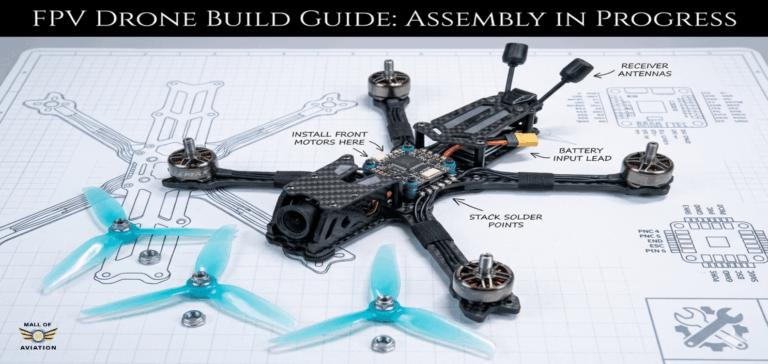
Tools, Gear, and FPV Drones You Need for Daily Flying
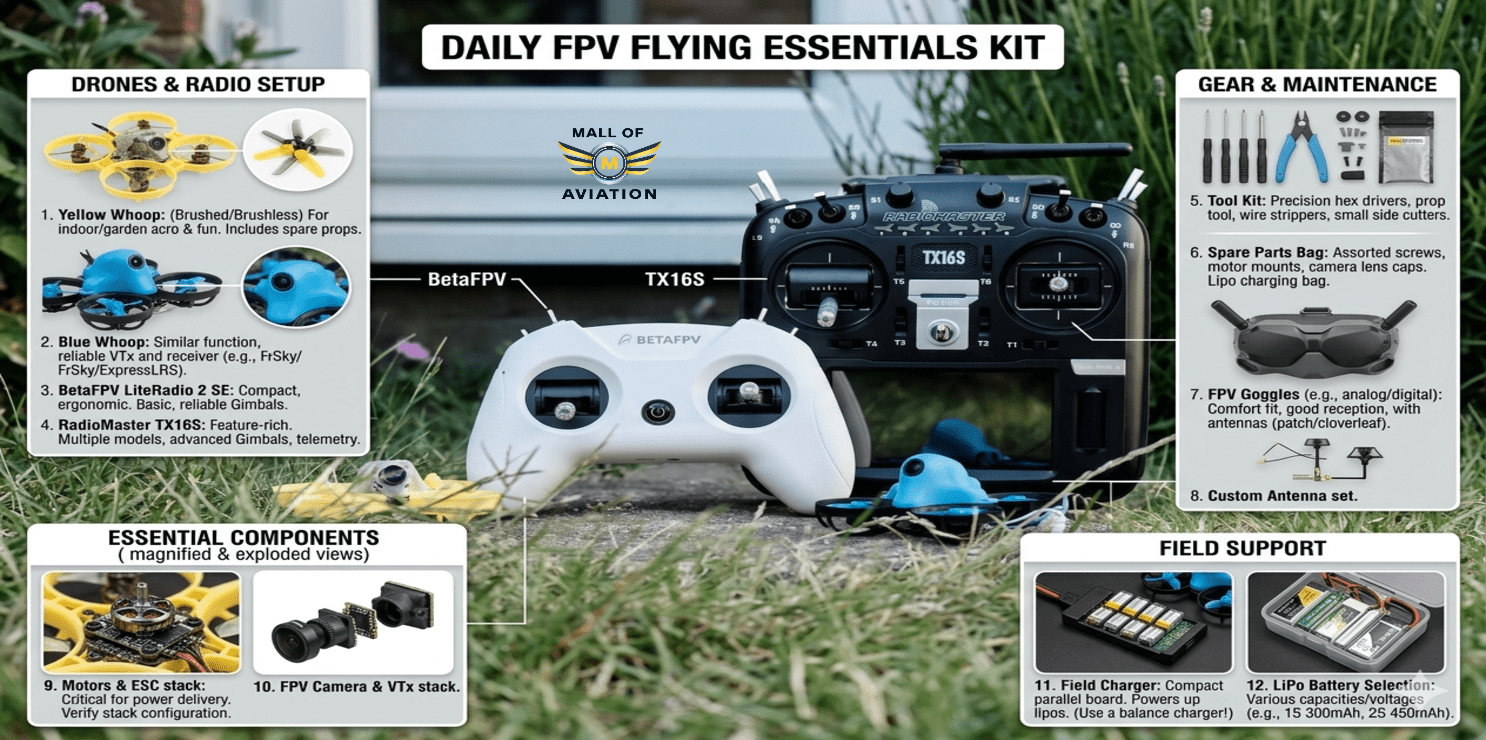
Quick Summary: This guide covers all essential FPV Tools and Gear, along with drones used daily by experienced pilots. From radios and goggles to soldering tools and batteries — these are the FPV Tools and Gear you need for a complete setup in 2026.
Tools, Gear, and FPV Drones You Need Every Day (Complete 2026 Guide)
If you’re serious about FPV drones, having the right FPV Tools and Gear is just as important as flying skills. Many pilots spend hours perfecting their stick movements in simulators but completely overlook the physical side of the hobby.
The workshop, the soldering bench, the charging station, and the drone bag matter. The truth is, your ability to build, repair, and maintain your equipment with the proper FPV Tools and Gear determines how often you actually get to fly.
Whether you’re a complete beginner trying to understand what to buy first, or an experienced pilot looking to upgrade your setup, this guide is designed to give you a clear picture of what matters and why. We’ll cover everything from control systems and video goggles to the essential FPV Tools and Gear and the best drones available in 2026.
In this detailed guide by Mall of Aviation, we break down the exact FPV Tools and Gear, and drones that experienced pilots rely on daily — with honest recommendations for every budget level.
📋 In This Guide
1. Radio Transmitters & Receivers
Your radio transmitter — also called a controller or TX — is the most important piece of gear in your hands. It is the direct link between your intentions and your drone’s movements.
A poor-quality radio with high latency or weak signal can make even a great drone feel unresponsive and unpredictable. Investing in a solid radio system from the start is one of the smartest decisions any FPV pilot can make.
For control systems in 2026, ExpressLRS (ELRS) is widely regarded as the best option available in the FPV hobby. Originally developed as an open-source project, ELRS has been adopted by virtually every major radio and receiver manufacturer. Its key advantages include:
- Best range and latency: Sub-millisecond update rates and a long control range make it ideal for both freestyle and long-range flying.
- Affordable hardware: ELRS receivers typically cost between $5 and $15, making it very accessible.
- Wide compatibility: Works with EdgeTX-based radios and a huge range of flight controllers and ESCs.
Recommended Radio Setup
- Radiomaster Boxer / TX16S Mark II: The most reliable and widely used radios in the FPV community. Both run EdgeTX natively and support ELRS out of the box.
- Jumper T20S: A newer, more compact option that combines a hall-sensor gimbal with excellent ergonomics — great for pilots who prefer a smaller form factor.
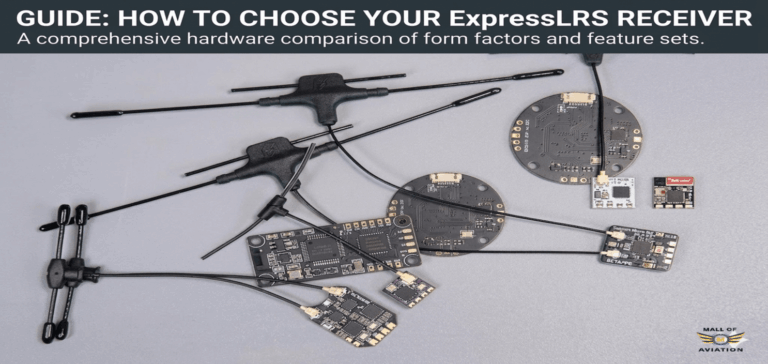
- ELRS Receivers (2.4GHz or 900MHz): Use 2.4GHz for most freestyle and racing use cases. Switch to 900MHz for long-range applications where you need maximum penetration and distance.
2. FPV Systems & Goggles
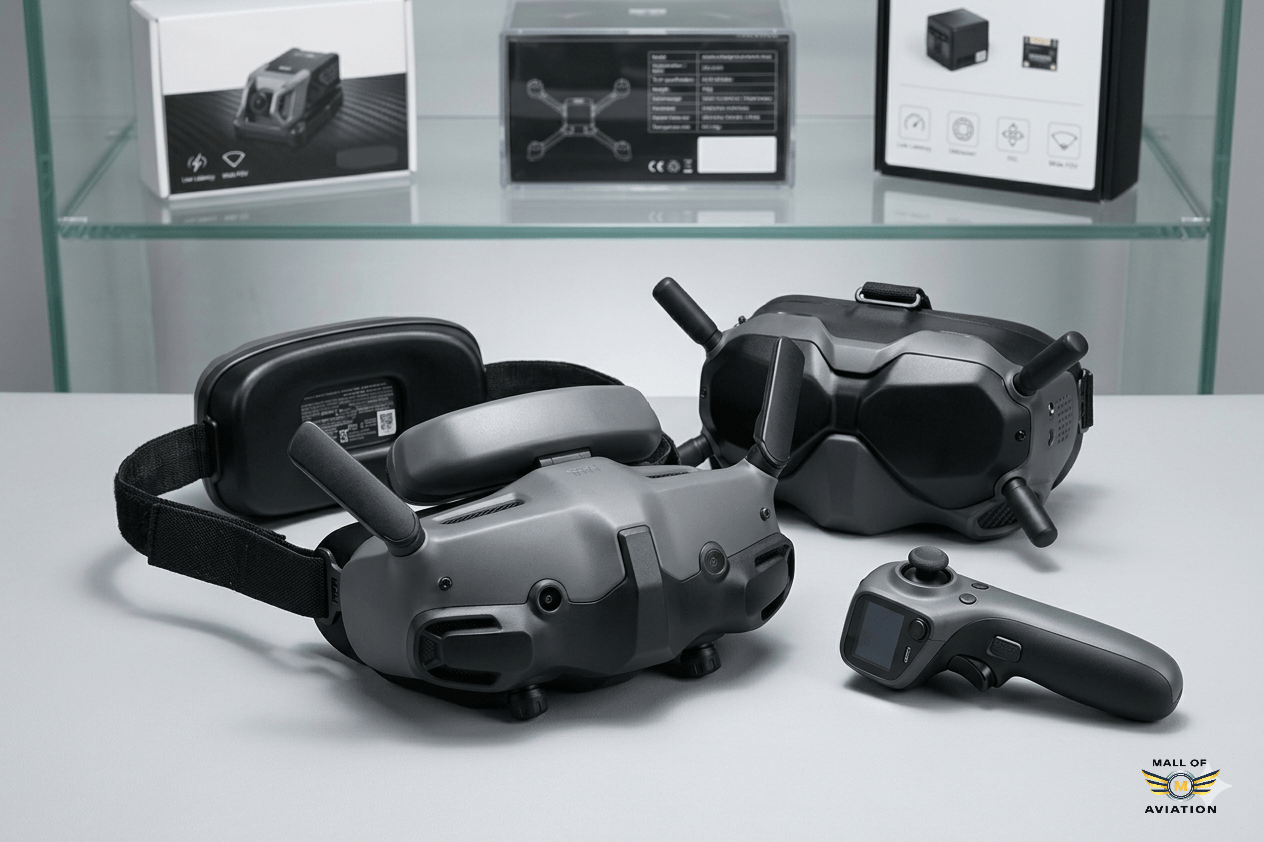
Your FPV video system is what puts you inside the drone. The quality of your video feed directly affects your ability to react, navigate, and feel immersed in the flight. Choosing the right system depends on your flying style, your budget, and what type of drone you’re flying.
There are currently three main categories of FPV video systems:
- DJI Digital: The gold standard for image quality and reliability. DJI’s O3 and O4 systems deliver a crisp, low-latency digital feed that dramatically outperforms analog in clarity and range. Ideal for cinematic work, freestyle, and serious racing.
- Walksnail / HDZero: Alternative digital video systems that compete with DJI. Walksnail (by Caddx) and HDZero both offer solid image quality and lower price points. HDZero is particularly popular with racers due to its zero-latency mode.
- Analog: The oldest and cheapest FPV technology. While image quality is lower, analog systems are extremely lightweight, affordable, and perfectly suited for tiny drones, micro builds, and budget setups.
Recommended Goggles
- DJI Goggles N3: The best overall FPV goggles for most pilots. Lightweight, comfortable, and fully compatible with the DJI O3/O4 ecosystem. Excellent image quality and intuitive menu system.
- Skyzone SKY040 Pro: The best analog goggles currently on the market. Sharp OLED display, head-tracking support, and built-in DVR make it a top choice for analog pilots.
- Cobra SD: An affordable entry-level goggle for beginners who want to start flying analog without spending too much upfront.
3. FPV Antennas
Antennas are one of the most overlooked parts of an FPV setup, yet they have a massive impact on signal quality and range. A high-quality antenna can be the difference between a clean, stable video feed and a pixelated, dropping signal that causes crashes.
Most FPV video systems operate on the 5.8GHz frequency band. When selecting and using antennas, there are a few critical rules to follow:
- Match your connector type: SMA and RP-SMA connectors look similar but are not interchangeable. Always double-check which connector your goggles and video transmitter use before buying.
- Use correct polarization: FPV antennas are either Right-Hand Circular Polarized (RHCP) or Left-Hand Circular Polarized (LHCP). Always match the polarization between your goggles’ receive antennas and the transmitter antenna on your drone.
- Upgrade from stock: The antennas bundled with most goggles and VTXs are mediocre at best. Aftermarket antennas from brands like TrueRC, Lumenier, and Foxeer significantly improve range and penetration.
4. LiPo Chargers & Power Setup
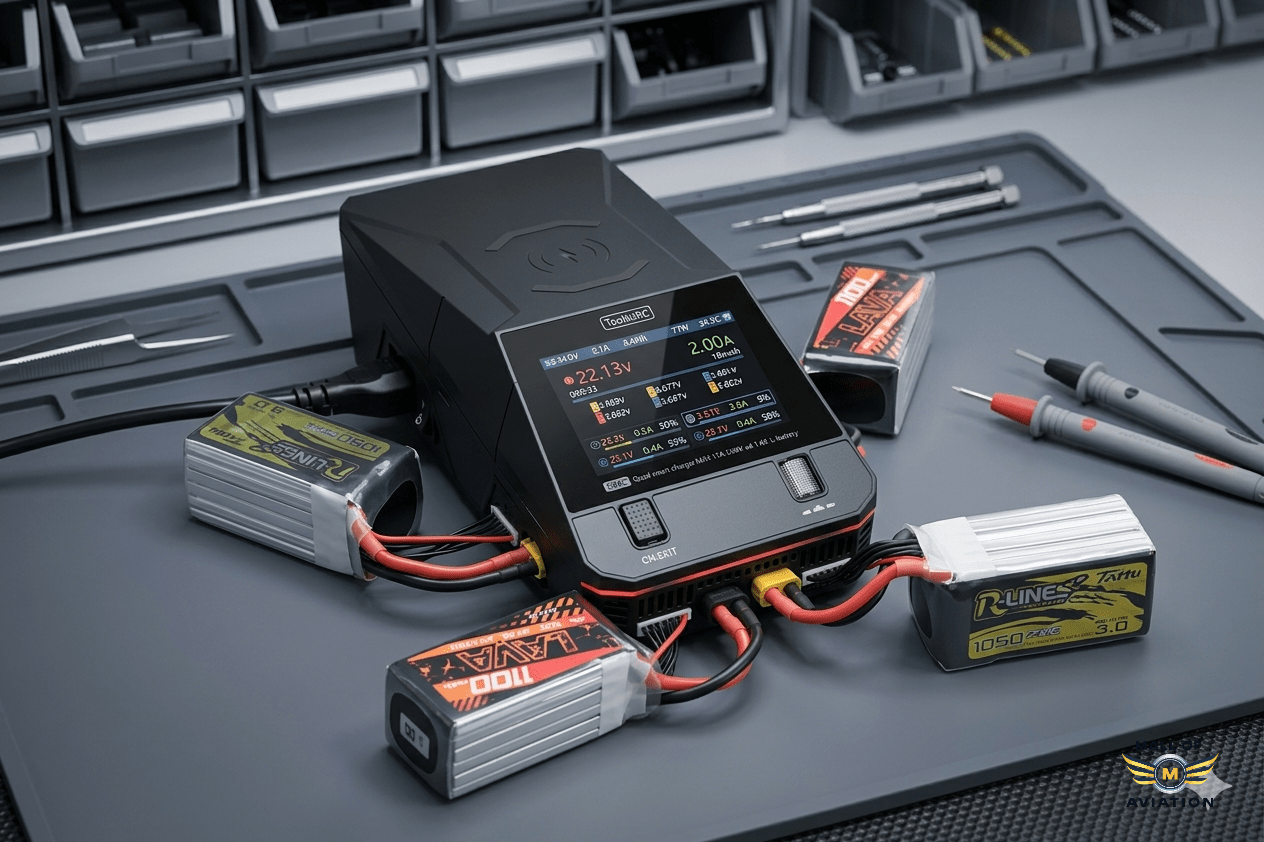
Battery charging is one of the most critical — and most dangerous — parts of the FPV hobby. LiPo (Lithium Polymer) batteries store a tremendous amount of energy and must be handled, charged, and stored correctly to avoid swelling, fire, or total failure.
A good charging setup doesn’t just protect your batteries; it protects your entire work area and your home. A complete charging station includes a primary charger, optionally a portable field charger, and supporting accessories like parallel boards and a power supply unit.
Main Charger
- ToolkitRC Q6AC: One of the most capable chargers in its price range. It supports multiple output channels simultaneously, covers all common LiPo cell counts, and includes both AC and DC power input — making it ideal for home use.
Portable Field Charger
- iSDT Q6 Nano: Ultra-compact and lightweight, perfect for charging at the field using a LiPo power source or car battery.
- SkyRC B6Neo: A reliable and accurate charger with a clean interface — great for beginners and experienced pilots alike.
Essential Extras
- Parallel charging boards: Allow you to charge multiple batteries of the same cell count simultaneously, dramatically reducing downtime between flight sessions.
- External PSU (24V recommended): Providing your charger with a dedicated 24V power supply unit improves charging performance and allows you to charge at higher wattage.
5. Essential FPV Tools and Gear for Your Workshop
This section focuses strictly on the physical FPV Tools and Gear required to build and maintain your drones. A capable FPV pilot is only as good as their workshop.
Whether you’re building a drone from scratch, replacing a broken motor, reflashing a flight controller, or resoldering a damaged pad, the right FPV Tools and Gear make every task faster, cleaner, and more reliable. Here is the FPV Tools and Gear that serious pilots use daily:
- Soldering iron: Absolutely non-negotiable. A temperature-controlled soldering iron (such as the TS-100 or Pinecil) is essential for connecting motors, ESCs, VTXs, and flight controllers. Poor solder joints are the leading cause of drone failures in the field.
- Precision screwdriver set: FPV drones use a variety of small screws — M2, M3, hex, Phillips. A quality set ensures you never strip a screw or leave bolts loose.
- Multimeter: Used to test voltage, continuity, and resistance. Invaluable for diagnosing electrical issues, checking solder joints, and verifying battery cell health.
- Wire cutters and strippers: Clean, precise wire work is the foundation of a reliable build. Good cutters and strippers save time and reduce the risk of shorts.
- Electric screwdriver: Speeds up motor installations and frame assembly — especially helpful when working with high-thread-count builds or tight stacks.
- ShortSaver / smoke stopper: A current-limiting device placed in series with your battery during the first power-on of a new build. It prevents catastrophic damage if there’s a short circuit on the board.
6. Supplies & Materials
Beyond tools, every FPV pilot needs a stock of consumable supplies and materials. These inexpensive items are used constantly in builds and repairs and can save a flight session when something breaks in the field:
- Electrical tape: For insulating bare wires, securing cable runs, and protecting connectors from shorts.
- Silicone wires (various gauges): Flexible, heat-resistant, and much easier to work with than standard PVC wire. Keep a roll of 18AWG, 22AWG, and 26AWG on hand.
- Double-sided tape (foam and thin variants): Used to mount receivers, cameras, and small electronics without drilling or screwing into the frame.
- Anti-slip battery pads: Grip pads that keep your LiPo firmly in place during aggressive maneuvers. Critical for freestyle and racing where G-forces can shift batteries mid-flight.
- Cloth / gaffer tape: Stronger than electrical tape, useful for securing loose wires, protecting motor wires from props, and field repairs on broken frames.
These supplies seem minor but are used constantly by every experienced FPV builder. Keeping a well-stocked supply drawer means you’re never stuck waiting for a delivery when you just need to get in the air.
7. Best FPV Drones in 2026 (Top Picks)
With so many options on the market, choosing the right FPV drone depends entirely on your flying style, experience level, and intended use. Here are the top picks for 2026 across every category:
DJI Avata 2
The DJI Avata 2 remains the definitive choice for cinematic flying, content creation, and travel. Featuring DJI’s O3 video system, prop guards for safety, and an extremely user-friendly interface, it’s the best option for pilots who want stunning footage without deep technical knowledge. The Avata 2 is also one of the safest FPV drones for indoor use thanks to its enclosed prop design.
GEPRC Vapor D5
Built for cinematic freestyle flying, the GEPRC Vapor D5 pairs a well-tuned 5-inch frame with the DJI O4 video system. It’s an ideal choice for pilots who want professional-grade video quality in a capable freestyle platform. The tune out of the box is smooth, responsive, and ready for Betaflight customization.
AxisFlying Manta 5 SE
One of the best value-for-money 5-inch builds on the market. The Manta 5 SE delivers excellent freestyle and racing performance at an accessible price point — making it a go-to recommendation for intermediate pilots ready to step up from bind-and-fly beginner drones.
Flywoo Firefly18
The best micro drone available for indoor flying. Its tiny footprint, lightweight design, and surprising performance make it perfect for flying inside warehouses, living rooms, or tight outdoor locations. The Firefly18 punches well above its size class.
Air65 II Tiny Whoop
For tiny whoop pilots, the Air65 II sets the bar for performance and value. Fast, agile, and competitive, it’s a favorite in indoor racing leagues and backyard freestyle sessions alike. The brushless motor system gives it significantly more power than older brushed designs.
Cinelog30 V3
The Cinelog30 V3 is the top cinewhoop for pilots who need smooth, stabilized, and cinematic footage from a protected platform. Prop guards keep the drone safe around people and objects, while the video quality easily rivals much larger builds. Ideal for real estate, travel content, and event videography.
Flywoo Explorer
For long-range FPV missions, the Flywoo Explorer is in a class of its own. Weighing under 250g, it avoids many regulatory hurdles while still delivering impressive range and flight time. Paired with an ELRS 900MHz receiver, it’s capable of flying several kilometers on a single battery.
8. Expert Tips for Your FPV Setup
Beyond the gear itself, how you organize and manage your setup plays a huge role in your overall FPV experience. Here are practical tips from experienced pilots that will save you time, money, and frustration:
- Always carry spare props: Props are the most frequently damaged component in FPV. Carry at least 2–3 extra sets in your bag at all times — especially for 5-inch and 3-inch builds where prop strikes are common.
- Organize your tools in a dedicated kit: A portable tool roll or case keeps everything accessible and ensures you never leave for a session without a critical tool. Label and group items by function.
- Use high-quality components throughout your builds: Cutting corners on motors, ESCs, or connectors leads to unreliable performance and more frequent repairs. Invest once in quality parts and save money in the long run.
- Bench test before every flight: Power up your drone on the bench, check that all motors spin correctly, verify your video feed is clean, and confirm your failsafe is properly configured before heading to the field.
- Store and transport batteries safely: Use LiPo-safe bags at all times. Never leave batteries charging unattended, avoid charging at above 1C if not in a hurry, and store at storage voltage (3.8V per cell) if not flying for more than a few days.
Build Your Complete FPV Setup with Mall of Aviation
From radios and goggles to soldering tools, chargers, and the best FPV drones of 2026 — Mall of Aviation stocks everything you need in one convenient place. Whether you’re just starting out or upgrading a serious race or cinematic build, we’ve got you covered with premium gear at competitive prices.
Frequently Asked Questions
What tools do FPV pilots use daily?
The core daily FPV Tools and Gear for any pilot include a temperature-controlled soldering iron, a precision screwdriver set, a multimeter, wire cutters and strippers, and a ShortSaver for safe first power-ons. An electric screwdriver is also a major time-saver for frequent builders.
These items represent the essential FPV Tools and Gear covering the vast majority of building, repairing, and maintaining tasks.
Which FPV video system is best in 2026?
DJI’s digital FPV system continues to offer the best video quality and overall reliability in 2026. The O3 and O4 systems provide crisp, low-latency feeds that significantly outperform analog.
However, if budget is a concern, Walksnail and HDZero are excellent alternatives, and analog remains valid for tiny whoop and micro drone setups where weight savings are critical.
Is ExpressLRS (ELRS) better than other radio link systems?
Yes — for the vast majority of FPV pilots, ELRS offers the best combination of range, latency, reliability, and cost in 2026. It has become the de facto standard for the hobby, and virtually all new radio transmitters and receivers support it natively. The open-source nature of the project also means it continues to improve rapidly.
Do beginners need all of these tools and gear right away?
No. Beginners should start with the basics: a solid radio, a beginner-friendly drone (like a bind-and-fly tiny whoop or the DJI Avata 2), and a reliable charger.
As you progress, add actual FPV Tools and Gear gradually. Start with a soldering iron and screwdriver set, then build out your workshop as you take on more complex builds. There’s no need to buy everything at once.
How do I keep my LiPo batteries safe?
Always charge LiPo batteries in a fireproof LiPo safe bag, never leave them charging unattended, and store them at storage voltage (3.8V per cell) when not in use. Avoid exposing them to extreme heat or physical damage, and retire any battery that shows signs of puffing or dramatically reduced flight time.
Final Thoughts
FPV flying is one of the most rewarding hobbies you can pursue — and having the right FPV Tools and Gear transforms it from a frustrating struggle into a deeply satisfying skill.
When your workshop is organized with the correct FPV Tools and Gear, your batteries are charged, your radio is dialed in, and your drone is properly built, every flight session becomes an opportunity to push your limits and capture incredible footage.
The key is to build your setup intentionally. Don’t rush out and buy everything at once. Start with the essentials: a good radio, a reliable FPV system, a quality charger, and a drone that matches your current skill level. Then, as your confidence and capability grow, expand your toolkit and upgrade your hardware to match your ambitions.
Every component in this guide has been chosen based on real-world use by experienced FPV pilots. There are no filler recommendations here — only the FPV Tools and Gear that genuinely makes a difference in the field and on the bench.
Start simple, upgrade gradually, always invest in quality, and never stop learning. The FPV hobby rewards patience, curiosity, and persistence more than any other factor.
Mall of Aviation provides everything you need to build, fly, and grow as a pilot — from your very first drone to your most advanced cinematic setup. Explore our full range of FPV Tools and Gear, and drones today and take your flying to the next level.