
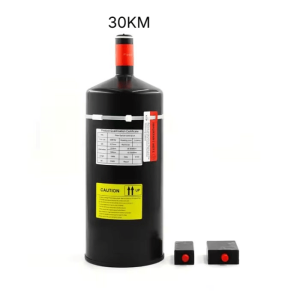
30km Fiber Optic Tether Spool for UAV & FPV Drones
30km Fiber Optic Tether Spool engineered for extreme-range UAV deployments. G657A2 fiber, 1310/1550nm compatibility, low attenuation, and secure interference-free transmission.
- Estimated Delivery : Up to 4 business days
30km Fiber Tether Spool – Long-Range Optical Communication System for UAV
The 30km Fiber Tether Spool delivers ultra-long-distance optical communication for UAV platforms operating in mission-critical environments. This system allows operators to transmit telemetry, encrypted command signals, and high-resolution video data across extended ranges without relying on radio-frequency transmission. By replacing RF links with direct optical connectivity, the spool ensures stable bandwidth, reduced latency, and consistent control performance.
Organizations deploy this configuration in border monitoring programs, offshore infrastructure inspection, ISR operations, and high-altitude surveillance missions. When RF congestion, signal jamming, or electromagnetic interference threatens wireless communication, optical transmission maintains uninterrupted command authority and data exchange.
30km Fiber Tether Spool Long-Distance Optical Performance
The system integrates G657A2 single-mode fiber engineered for 1310nm and 1550nm wavelengths. This fiber type supports ultra-low attenuation across the complete 30-kilometer length. The controlled signal path preserves video clarity and telemetry precision even during sustained operations. Because the architecture uses guided optical transmission, it removes spectrum dependency and stabilizes communication in restricted or defense-regulated zones.
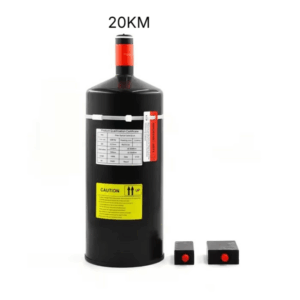
Operators planning scalable deployments often compare mission ranges with models such as the 20km fiber tether spool when designing endurance-based UAV systems. The 30km configuration extends that operational envelope for maximum geographical coverage.
30km Fiber Tether Spool Deployment Engineering & Structural Strength
The reinforced ABS or carbon composite shell protects the internal fiber during transport and active field deployment. Engineers designed the housing to resist vibration, environmental exposure, and mechanical stress. A precision aluminum exit nozzle guides fiber release during flight and reduces surface abrasion as the tether deploys.
The internal winding mechanism maintains balanced tension throughout aerial lift and hover phases. This design reduces micro-bending stress and protects long-distance signal quality. With tensile capacity exceeding 50N, the spool supports stable high-altitude positioning and extended hover durations without compromising structural integrity.
System Integration & Operational Architecture
The 30km Fiber Tether Spool includes pre-terminated FC connectors that simplify installation within UAV ground control ecosystems. Technicians connect it directly to telemetry modules, onboard communication units, and high-bandwidth imaging payloads. The streamlined interface reduces deployment time during rapid-response missions.
Mission planners rely on this configuration for maritime patrol corridors, wide-area border surveillance, offshore energy monitoring, and atmospheric research programs. The extended optical reach allows UAV platforms to operate far beyond conventional wireless limits while maintaining secure and deterministic communication pathways.
Global single-mode fiber performance benchmarks are defined by established optical manufacturers such as Corning Optical Communications The G657A2 fiber used in this system aligns with recognized long-distance attenuation and structural reliability standards required for mission-critical deployments.
Technical Specifications
| Fiber Type | Single Mode G657A2 |
| Operational Distance | 30KM |
| Supported Wavelengths | 1310nm / 1550nm |
| Core Diameter | 9/125µm |
| Maximum Attenuation | ≤18dB |
| Connector Interface | FC |
| Housing Material | ABS / Carbon Composite |
| Tensile Strength | >50N |
This long-range optical tether configuration supports extended UAV communication strategies across expansive operational territories. It combines structural resilience, signal stability, and long-distance optical precision to meet the demands of modern aerial surveillance systems.
Add a review
You may also like…
Related products
-
-
Dji Phantom 4 Pro Yaw Arm
₹3,500 -
-
Reviews
There are no reviews yet.